PetterSteel and 3D Talo bring XR training to sheet metal work
Overview
How PetterSteel and 3D Talo are transforming skilled trade training in sheet metal construction through accessible, immersive XR technology.
Solutions
Virtual Worksite Orientation, a hand-tracked VR training app built with Unity Editor and deployed on Meta Quest 3.
Use case
Onboarding and jobsite assessment training for sheet metal installers in construction.
Customers
PetterSteel and XR partner 3D Talo.
Results
PetterSteel’s Virtual Worksite Orientation program, developed in Unity by 3D Talo, is currently in its early adoption and pilot phase but already demonstrating meaningful operational impact for skilled trade onboarding.
Key results, benefits and expected outcomes include:
- Jumpstart in adoption: Five trainees have already completed the VR program, with ten expected in the first year.
- Increased training capacity: VR reduces reliance on senior installers, allowing PetterSteel to onboard more trainees without stretching limited mentorship resources.
- Greater efficiency: Field-ready orientation exercises help streamline prep time before workers set foot on live sites.
- Portability and ease of use: Built for Meta Quest 3 with hand tracking, the solution enables in-field training with minimal equipment or supervision.
- Standardized onboarding: The application ensures every new hire receives consistent, high-quality exposure to critical jobsite readiness criteria.
- Strategic scalability: By codifying expert knowledge into virtual simulations, PetterSteel lays the groundwork for repeatable, process-driven workforce development.
- Business impact: Supports PetterSteel’s growth by enabling faster, safer, and more predictable employee ramp-up, reducing costly delays and errors on-site.
For PetterSteel, XR training is more than a tech upgrade—it’s a strategic move to scale skilled labor while preserving the quality craftsmanship the company is known for.
PetterSteel and 3D Talo: A Unity case study
How a small construction firm is making big waves with Unity to scale skilled trade training
PetterSteel, a Finland-based specialist in structural sheet metal, has adopted VR training to solve a challenge facing many small construction companies: how to scale skilled trade onboarding without stretching senior staff thin.
In partnership with Finnish XR studio 3D Talo they developed a virtual orientation program that leverages Unity’s real-time 3D technology and is optimized for Meta Quest 3—complete with hand tracking and intuitive design.
The result: a scalable, portable, and highly realistic training experience that supports PetterSteel’s growth goals.
PetterSteel virtual orientation environment. Video courtesy PetterSteel and 3D Talo.
The challenge: Skilled training that doesn’t scale
Sheet metal installation isn’t just physical—it’s precise, safety-critical, and full of edge-case scenarios that are hard to replicate in traditional training. Traditional training in sheet metal installation relies heavily on apprenticeships. In Finland, PetterSteel, a niche but innovative sheet metal construction company realized as their project volume grew, the time available from master installers started becoming a bottleneck.
As a small business, their goal was ambitious: digitize decades of field knowledge into an immersive, repeatable training experience—and do so without a massive team or budget. They needed a way to scale onboarding, and fast, without relying entirely on time-strapped master installers. They were looking for a practical solution that could:
- Simulate real-life jobsite challenges safely and repeatably
- Provide consistent onboarding for new hires
- Reduce the dependency on senior staff for routine knowledge transfer

VR construction training.
The solution: VR orientation built for realism—and accessibility
Built in Unity, PetterSteel’s Virtual Worksite Orientation program immerses trainees in realistic 3D jobsite scenarios via Meta Quest 3 headsets. The app uses hand-tracking for a controller-free experience that mirrors physical site evaluation—right down to the need to kneel, crouch, or look around obstacles, all in a safe virtual environment.
The simulation teaches how to determine whether a site is ready for PetterSteel’s installation crews to begin work—critical for reducing downstream liability and ensuring that hand-off criteria are met. It is also invaluable in helping trainees build confidence in their ability to identify hazards, incomplete prep, or other red flags before real work begins.
“Leveraging virtual reality for employee orientation is completely new for us. It caught us by surprise how true to real life and approachable virtual training environments can be—and that the complete package is still portable and easy to use.”

Hermanni Korteniemi - PetterSteel
Responsible ForemanThe Unity advantage: Lightweight, flexible, and fast to iterate
3D Talo’s development team used Unity as their core engine, combining a proprietary training framework with PlayMaker for easy content scripting. The result is a nimble workflow where instructional designers can build and update training scenarios without heavy coding.
The solution’s intuitive interface uses a “look and pinch” model—ideal for onboarding in field conditions and minimizing friction for new users.
Unity’s compatibility with Meta Quest 3’s native features, including hand tracking, made the design seamless. Unity enabled:
- Seamless integration with Meta Quest 3’s hand tracking
- Lightweight interaction model using “look and pinch” inputs
- Rapid iteration with low-code authoring via PlayMaker
Future scalability with tools like Unity Asset Manager
“The versatility of Unity is unparalleled. Even as we consistently integrate a sometimes overwhelming array of emerging technologies, there has never been an end-user need or a technical challenge we couldn’t comfortably accomplish with Unity.”

Teemu Wilander - 3D Talo
Project Manager & Co-founderSmarter training: Higher capacity, faster onboarding
As a small business, PetterSteel is proof that XR training doesn’t require a large enterprise budget—and that immersive learning can dramatically accelerate skilled trade training.
PetterSteel’s VR orientation program is already streamlining how new workers are trained—reducing reliance on senior staff, standardizing onboarding, and enabling in-field use with minimal setup.
By translating expert knowledge into immersive, repeatable simulations, the company is building a scalable foundation for workforce growth.

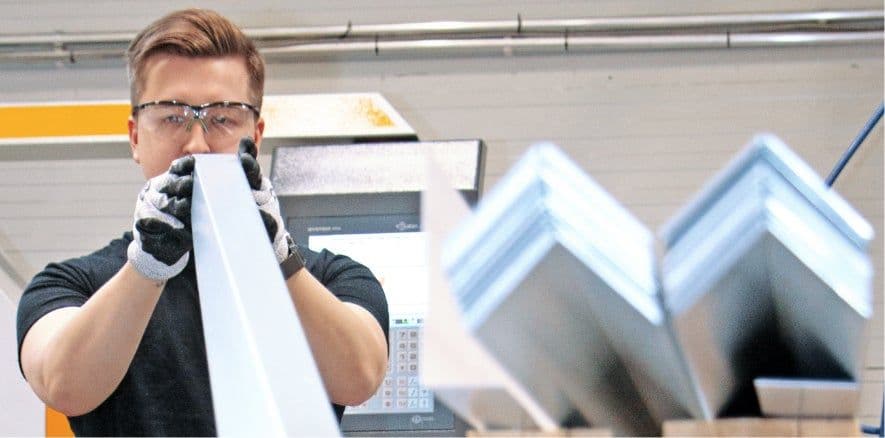
Sheet installation work in progress. Image courtesy PetterSteel
Explore the case study
Fill out this form to get access to the latest customer success stories