Square Glade Games wins gamescom CommUnity Choice Award for Outbound

Fergus Baird - Unity Technologies
Senior Content Marketing Manager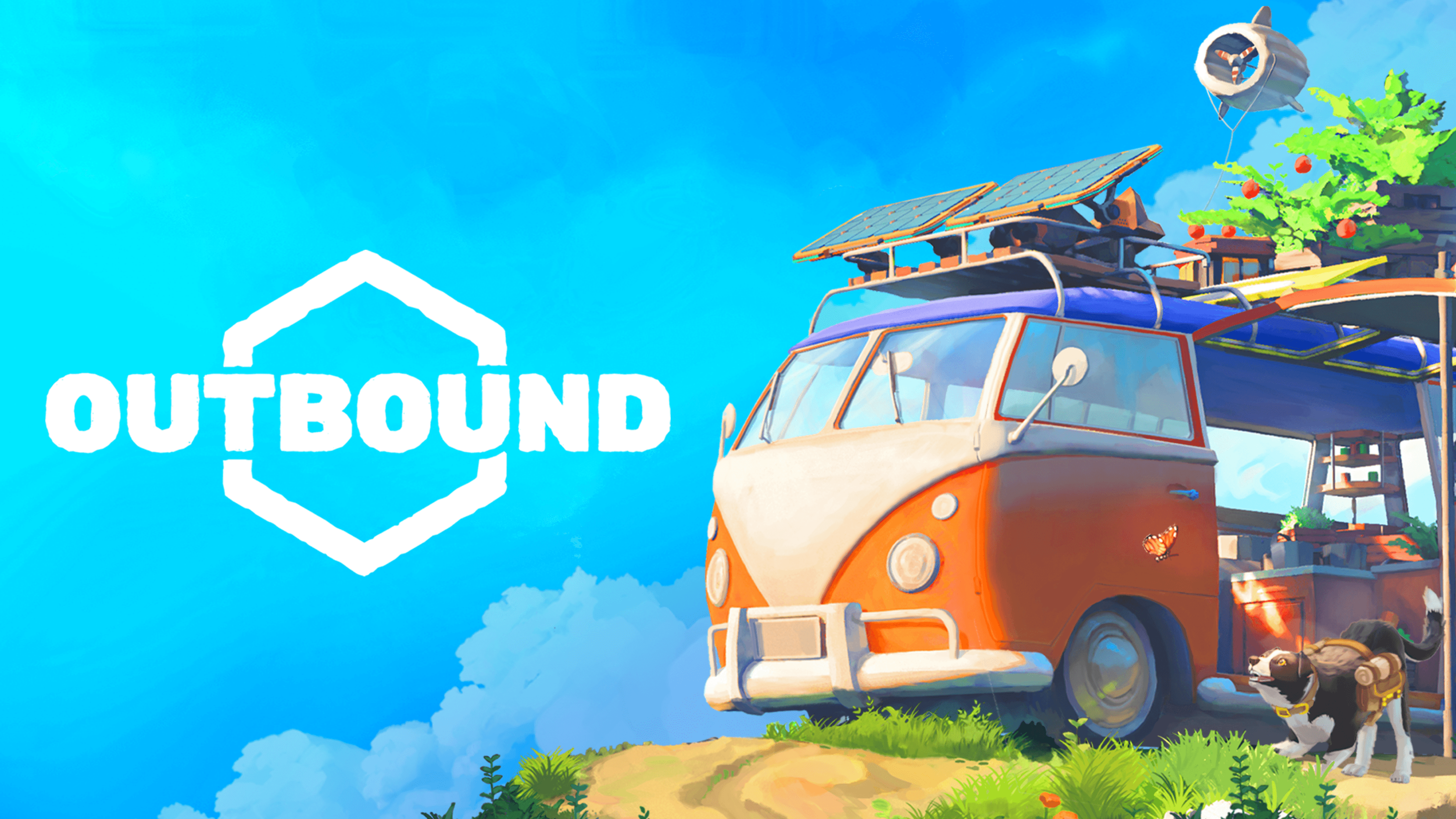
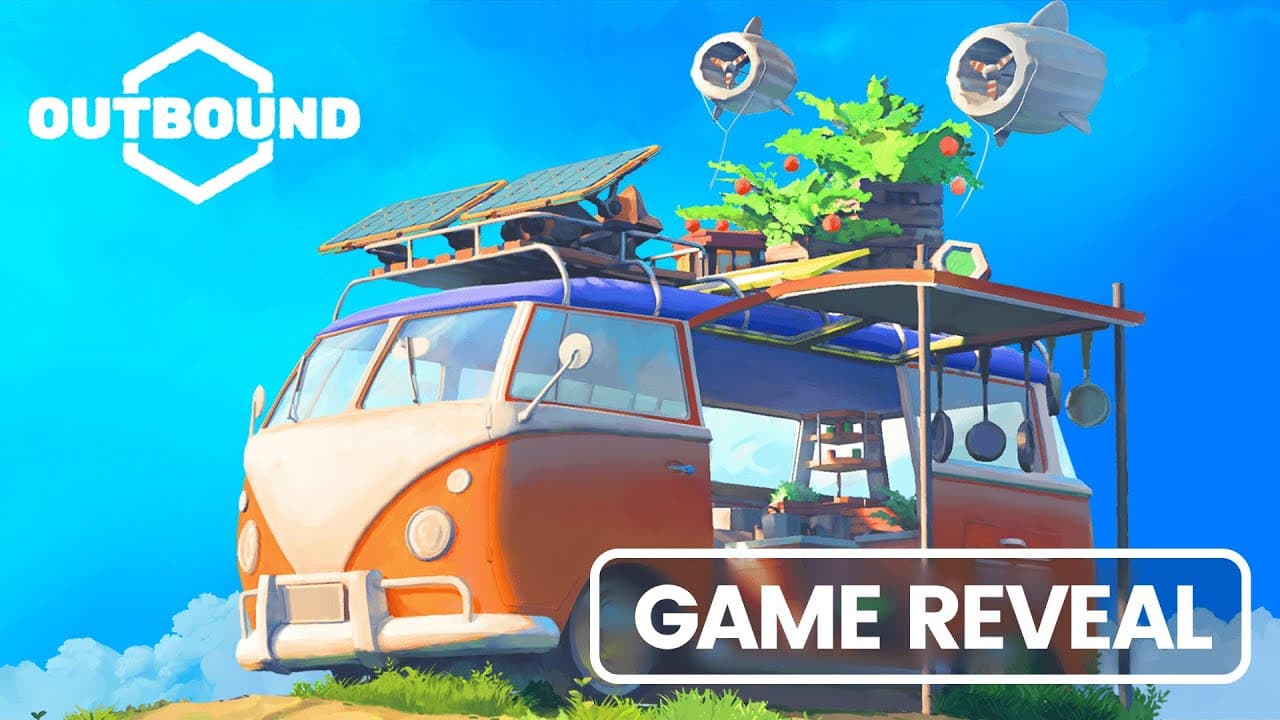
This year at gamescom in Cologne, Germany, Square Glade Games took home the third annual CommUnity Choice Award for Outbound. We interviewed studio founder Tobias Schnackenberg to learn more about this upcoming “cozy-vival” van life simulator.
Read on to see how Square Glade Games worked to define Outbound’s place in the crowded survival-crafting market, created a low-poly look using the Universal Render Pipeline (URP), ran a successful Kickstarter to fund their game, and more.
Thanks for speaking with us today, Tobias, and congratulations on winning the CommUnity Choice Award! What does this recognition from the community mean to the team at Square Glade Games?
We’re really grateful and also a little overwhelmed! We’re very happy to see that we have so many fans in our own community who support us. It also showed us that beyond our community, in the general Unity audience, there’s a lot of appreciation for Outbound’s ideas and visual style. It just feels good to get that much praise for the game.
Besides winning this award, how was your time at gamescom? What games were you most excited about?
It was really great, but exhausting. We didn’t leave the Indie Arena booth at all; our priority was our community. We were there almost 10 hours a day. The games I liked most were Tiny Bookshop from neoludic games and Star Birds from Toukana Interactive.

Square Glade Games with the gamescom CommUnity Choice award
With your CommUnity Choice Award win, you’re joining the likes of Tomas Sala (Bulwark Evolution: Falconeer Chronicles) and Cosmo Gatto (Aka). Why do you think the Unity community is so drawn to these kinds of creative sandbox games?
The cool thing with this genre is that everyone’s playthrough is very different. Players appreciate that unique experience. You know what you're getting in terms of genre, but your base, exploration path, and adventures will be your own. It’s not like watching a linear game where you know the ending. In Outbound, you see someone playing and think, “I’d do this differently,” or “My van would be orange.” People love creative freedom, and they often surprise us with what they create. The multiplayer aspect also helps, as friends can play and build together on the same van.

Outbound | Square Glade Games
Simulation games are really having a moment. What was your approach to standing out in a crowded market?
You need something different. This is my personal take, but a good game is about 50–70% known stuff, with 30% unknown. Players know what they like but seek new twists within their niche. Reinventing the wheel completely is risky. With Outbound, the core exploration and crafting loop is familiar, but the “cozy-vival” aspect is new. There aren’t many cozy games in this genre; many are grim and harsh. The second unique element is the movable base. We identified a niche where we ourselves would like it and believe other players would appreciate the convenience of moving their base with them. That’s the mechanical hook.
How does the movable base work?
You start with your camper van, building from the inside with kitchen counters and workstations. Space is limited, so you can upgrade your van to add a foundation on the roof, with a ladder. This lets you build a modular base – multiple stories, furnished and decorated. When you want to move, you close a side door, and the entire base folds into a small box. You drive, and when you set camp again, everything unfolds back into place.

Outbound | Square Glade Games
Can you elaborate on the “cozy-vival” elements in Outbound? What’s at stake for the player?
You’re not really “surviving” in Outbound; it’s a cozy game through and through. We introduce needs like health, hunger, and vehicle needs (battery, tire pressure, motor temperature). You care for yourself and your vehicle, but the only punishment for not doing so is a time penalty – things take longer, you might faint, costing you time. There’s no hard punishment. That’s why we call it a “cozy-vival exploration crafting game.”
Outbound’s visual style is getting a lot of praise. How did you achieve this look using URP?
It’s surprisingly simple. 90% of the materials use the URP Lit Shader. We have very limited real-time lighting and crank up the ambient lighting very high, making everything super bright, crisp, and clear. Then we apply a very consistent color palette across all materials. That’s it – that’s the whole secret!

Outbound | Square Glade Games
You’re using Unity 6. What motivated this early adoption, and what’s been most useful?
We really appreciate Unity’s customizability. If the Editor lacks a tool, we can write it into the Engine. We have our own context menu with custom tools for exporting text, importing translations, generating asset usage reports, and optimizing scenes. These self-written tools are the most valuable part of the engine for us, used almost daily. For me personally, Mac performance has improved a lot with Unity 6, especially in terrain manipulation.
Can you talk about a technical or design hurdle you overcame during development?
A funny one my cofounder Marc experienced was our vehicle getting stuck easily in the terrain. If you drove offroad or hit the slightest hill, the collider would get stuck, or the wheels would float, losing grip.
So, what we did for that was, first of all, the actual collider that we now use for driving is way different than what you might think, looking at the vehicle. We carved out the bumpers and the bottom of the vehicle to ensure nothing in the proximity of the wheels would collide with the ground, allowing you to drive all the time. If your wheels don’t touch the ground, you can’t drive.
And second, when you drive offroad and we detect you don’t have enough force to overcome an obstacle like a hill, we gradually crank up the motor in the background. We add more force from the back to get you over the hill. As a player, you think your vehicle is consistent in power, but in the background, we’re applying all kinds of forces to make it feel right, even though a real vehicle wouldn’t do that. So, that was an interesting challenge to make the vehicle feel right.

Outbound | Square Glade Games
Which assets from the Unity Asset Store have you found particularly helpful?
I’d highlight EasyRoads, which we use for the road network in Outbound. And for the vehicle, we use an implementation of NWH Vehicle Physics, which uses Unity Physics as a wrapper to connect the vehicle’s rigid body and wheels. For a game about a van, the van and roads are obviously important!
You funded this project successfully through a Kickstarter campaign. Any advice for indies looking into crowdfunding?
Yeah, so first of all, it is important to know for any developer that a Kickstarter requires a lot of work. It’s way more than just setting up the page and you’re good. Even the trailer is a lot of work, the page itself of course, figuring out the rewards and making sure the economics of the rewards make sense, is a lot of work. Ideally you would have something playable to give people more trust in your project.
The second thing that’s very important to know is a Kickstarter only makes sense if you already have a community behind you, and then you can expand this community with a Kickstarter. Having a Kickstarter also usually means you get picked up by media and content creators will talk about it, so it will also help with marketing, but none of that will happen if you don’t do the first push, basically.
That first push is super important. I think when we launched our Kickstarter we had more than 5,000 followers on the Kickstarter page, and that’s important because these people get a notification once the Kickstarter starts.
I would say the first 48 hours are the most critical. You want to make sure that people who might feel hesitant about backing the campaign can see others doing so. It shows that there’s genuine interest, which makes people feel more confident about backing it.

Outbound | Square Glade Games
What’s one piece of advice you’d give to a new Unity developer who’s starting to make a game today?
First of all, Unity is a great choice. I think Unity is very clear from an interface standpoint and helps make a complex topic like game development as understandable as possible. For your first project, be very mindful about scope. For the very first project, I’d honestly just remake an existing game – your own version of Tetris, Minesweeper, Pong, something super simple, just to get used to the workflows. You’ll make mistakes, especially at the beginning, and that’s fine; you learn bit by bit.
Then, gradually increase the scope. For your first original ideas, make sure you can complete them within ideally a month or a couple of months, then move on. Don’t worry too much about commercial games at first; just get used to the engine.
For most people, it begins as a hobby. For me, I started as a hobby, making small projects in my free time. At some point, I wanted people to play them, so I released five or six smaller projects on itch.io for free. I got really valuable feedback. Don’t start with a hundred-plus hours MMO project as your first game – it’s never a good idea!

Square Glade Games (blue shirts) and Unity (red shirt) at gamescom's Indie Arena Booth
Actually finishing a game is often said to be the hardest part of development. How are you staying motivated to keep going?
You’re absolutely right, finishing is the hardest. When you think you have 20% left to finish, just polish, in reality, that’s sometimes 50% of the project – a lot of work. To stay motivated, it’s really important to pick an idea that you can stay in love with for a longer time, at least until you can finish it. If you’re working on something you don’t really believe in, it’s very hard to finish.
Honestly, I also think a team helps. I’ve done both solo and team development. Both have advantages, but for motivation, being part of a team helps because you can motivate each other. You see that people are depending on you, so you don’t just abandon your project. That can really help. But it remains the most difficult part.
Outbound is currently in closed alpha testing; follow the game on Steam for updates. Explore more Made with Unity games on our Steam Curator page, and check out more stories from Unity developers on our Resources page.