How CEA rehearses fusion reactor operations in Unity before building a mockup

Removing a component from a nuclear fusion reactor is a procedure of about 500 steps, carried out by operators in ventilated suits who can’t hear a thing, in a place where every minute of exposure counts. How do you rehearse that before you build anything? Stéphane Gazzotti, Head of the Virtual Integrated Platform for Engineering & Remote handling (VIPER) at CEA’s Institute for Research on Fusion by Magnetic Confinement (IRFM), shows how CEA does it in Unity.
Discover how CEA, France’s Alternative Energies and Atomic Energy Commission, has built its simulation work for the WEST and ITER tokamaks (doughnut-shaped fusion devices that use magnets to contain plasma) on Unity over 15 years, and why simulation now means building just one physical mockup.
Watch the full video to learn how:
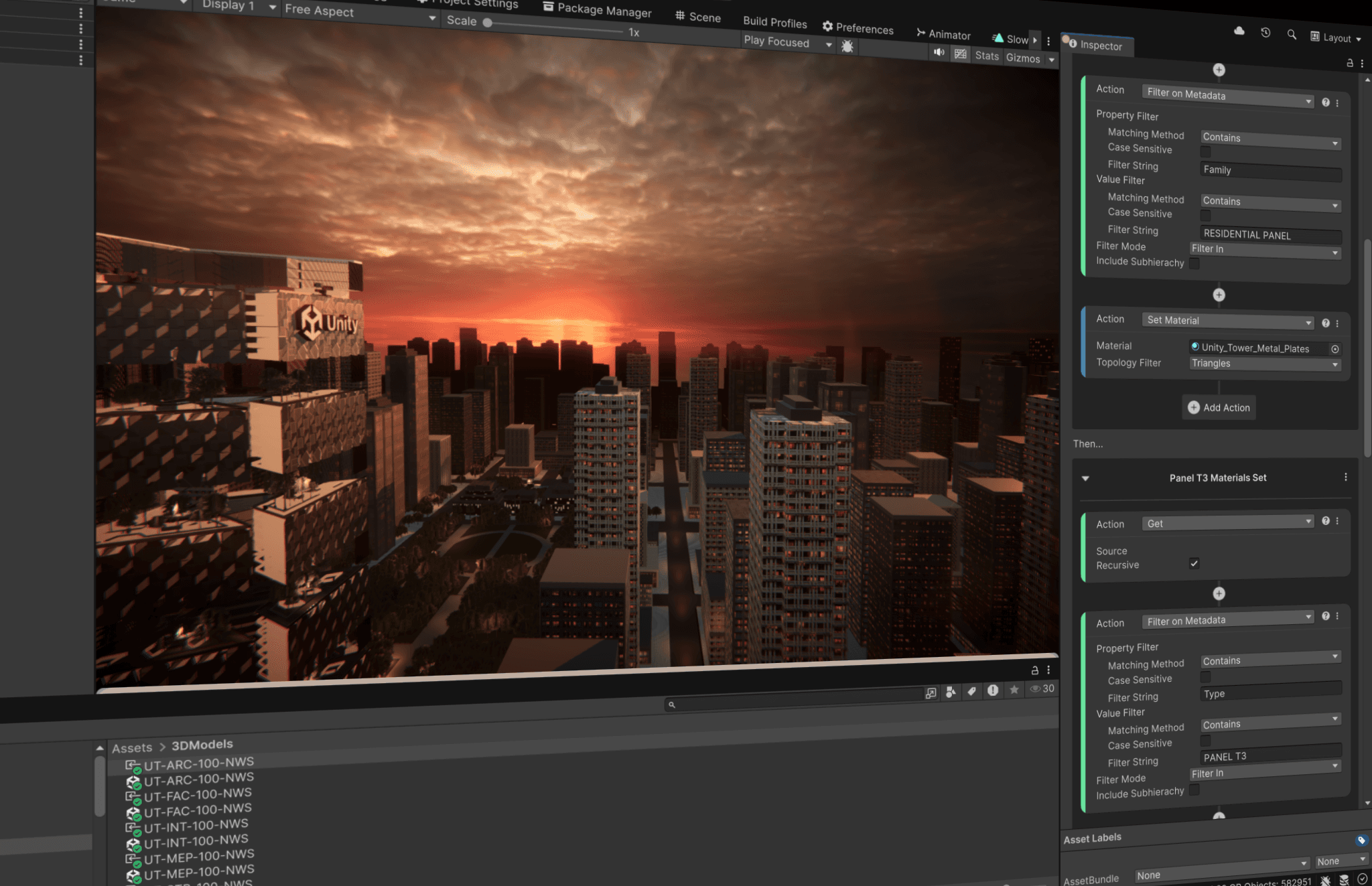
- A massive model, 30 million polygons in a single ITER room and 20 terabytes of data overall, becomes an interactive simulation through automation instead of manual work, with VIPER’s digital continuity from computer-aided design (CAD) to simulation.
- S4D, a standalone Unity application that adds time to simulation, combines a CAD model, its metadata, and a sequence to step through procedures such as removing a Test Blanket Module, a task of about 500 steps.
- CEA simulates operators working in ventilated suits, including how long a suit takes to deflate before they can crouch and how hard it is to hear inside it. Teams use this to cut radiation exposure by removing unnecessary steps and reducing time, following the ALARA principle (as low as reasonably achievable).
- Simulating first means building just one real mockup, which saves time and cost in an industry that always needs one.
- Unity proves valuable through automated workflows (including data preparation with Unity Asset Transformer, formerly Pixyz), real-time high-fidelity simulation, early validation of human factors, gamified interaction, and rapid prototyping.
- CEA plans to take simulation further, from real-time radiation dose calculation to integrating AI.
This session was recorded at the Unity Industry Summit in Munich, October 2026.