Architecting Albion Online: How Sandbox Interactive built a PvP MMO to scale across platforms

Fergus Baird - Unity Technologies
Senior Content Marketing Manager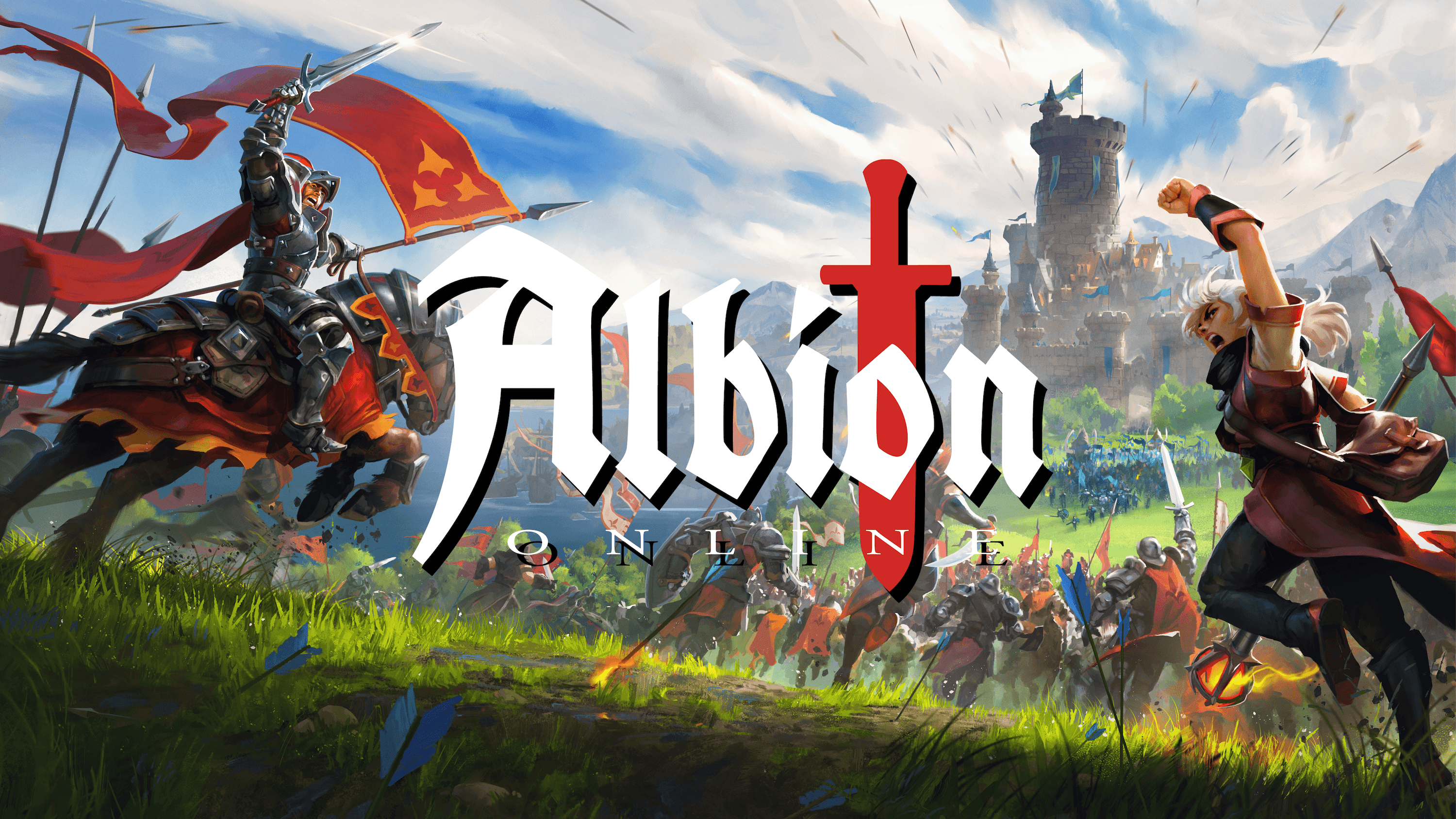
Officially launched in 2017, Albion Online is one of the longest-running MMOs built with Unity. Sandbox Interactive began developing the game in 2012 with the ambitious goal of creating a hardcore, PvP-focused online game. As a small independent team they needed a strong technical foundation that could support large numbers of concurrent players and deliver performant gameplay as Albion Online expanded to additional platforms.
Today, Albion Online operates seamlessly across PC, Mac, Linux, iOS, Android, and most recently, Xbox Series X|S via Xbox Game Pass. We interviewed the studio’s engineering leads to dig into the game’s technical foundations and hear about the player-first development approach that has kept this cross-platform MMO going for a decade.

One build to rule them all
A major pillar of Albion Online’s longevity is its seamless cross play. Players can easily switch between mobile, desktop, and consoles using one login, engage in large-scale PvP combat across platforms, and enjoy regular content updates that hit all supported devices simultaneously. To enable this consistent experience, Sandbox Interactive operates the game from a single Unity project.
“We ship from one Unity project with platform-specific UI profiles,” explains principal game engineer Johannes Kosanetzky. “In the Editor, I can flip to our mobile UI so we test layouts, navigation, and performance without leaving the desktop. Input is abstracted and with Unity Remote we validate touch quickly – so iteration stays fast.”
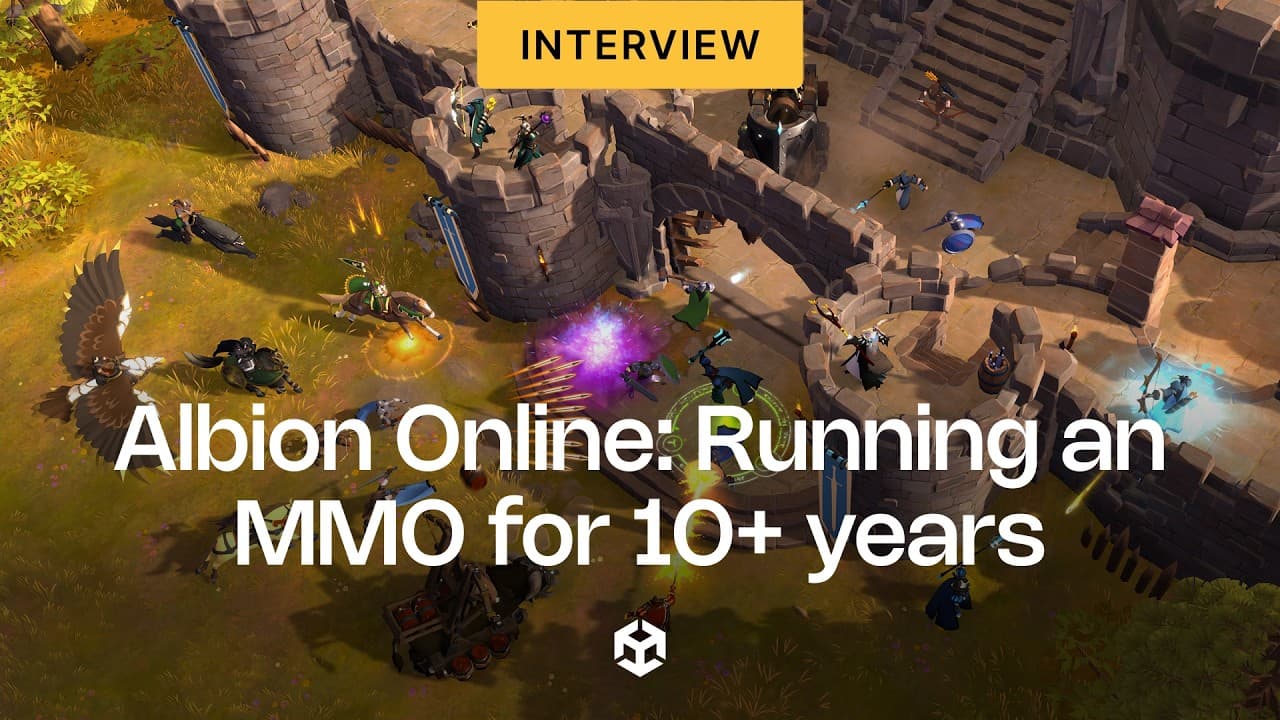
When designing new features, the team takes a “desktop-first” approach to ideation, but Android serves as their absolute performance baseline. To maintain a unified experience, Albion Online’s gameplay logic remains identical across all platforms; only the visual fidelity scales. Currently, the mobile build turns off post-processing and utilizes forward rendering, while the desktop version relies on deferred rendering. Looking ahead, Sandbox Interactive plans to transition from Unity's Built-In Render Pipeline to the Scriptable Render Pipeline (SRP) to better tune graphics per device.
To maintain stability across their platform builds, the team relies on an extensive CI/CD pipeline. Jenkins provides daily builds for every platform, while built-in validation tools catch missing references, mesh size limits, and game-data errors before they become an issue. Every developer can run the full server-client stack locally, drastically speeding up feature work and debugging.

Albion Online | Sandbox Interactive
Decoupling simulation from visualization
In a combat-heavy, skill-based MMO with potentially hundreds of players battling on screen in a single instance, performance is paramount; players shouldn’t feel like they’re at a disadvantage on one platform over another. To ensure smooth and fair gameplay, Sandbox Interactive made the crucial early decision to keep core game logic strictly separate from what the player sees on screen.
“Our core simulation layer is completely independent of Unity,” says principal game engineer David Eibensteiner. “We even run our own bots locally to simulate large-scale battles for testing. Unity is used heavily for input handling and rendering.”
In practice, the game client is essentially broken into three distinct layers:
- The input layer determines what action is triggered based on the specific platform.
- The simulation layer predicts that action on the client while sending updates to the authoritative server.
- The visualization layer displays those actions and state changes client-side.
This decoupled Model-View-Controller (MVC) architecture ensures that client-side rendering never bottlenecks the underlying game logic.

Albion Online | Sandbox Interactive
Bringing the battle to consoles
Having already done the hard work of optimizing Albion Online for mobile devices, Sandbox Interactive were ready to hit the ground running on console development. However, console architecture still came with a few surprises.
“On consoles, one big difference is stability rules: the platform can crash on errors that would not be fatal elsewhere,” notes Kosanetzky. “Hardware-wise, consoles offer more powerful GPUs but weaker single-thread performance compared to high-end PCs. To make best use of that, we’re moving more work off the main thread into worker threads or directly onto the GPU. On memory, we’re less constrained than on mobile, which gives us room for larger caches and higher-quality assets.”

Beyond raw performance, balancing cross-platform PvP is a monumental task where the health of the game is always at stake. In certain situations (for example, FPS games), players using mouse-and-keyboard setups can be said to have an advantage over players using gamepads, and touchpad controls add another layer of balancing complexity.
“Different input methods are simply better at different things,” Eibensteiner explains. “On mobile and controller, character movement and positioning can feel more natural, while precise targeted or skill-shot abilities tend to work better with a mouse and keyboard.” To solve this, Sandbox Interactive designs controls from scratch for every new platform rather than simply porting UI layouts, ensuring each input method feels natural.
Albion Online | Sandbox Interactive (mobile gameplay)
Building a dedicated player community
Albion Online’s solid technical foundations make the game run, but its passionate community is what keeps it thriving. Sandbox Interactive credits the game’s long success to actively involving players and content creators in development decisions. By getting input on new features from some of their most dedicated players early, they can refine and improve them before they go out to the broader playerbase. However, Sandbox still makes the final call on what ends up in the game.
“Players are great at touching on problems – or symptoms of underlying problems – but the right solution is usually something different from their suggestion. Our job is to figure out what’s actually bugging them,” says Eibensteiner.

Albion Online | Sandbox Interactive
In one example, Eibensteiner shared how community growth and feedback led the studio to adapt Albion Online’s server infrastructure for a more global playerbase. Until that point, Albion Online had operated on a single global server in the United States, but as the game grew in popularity, Sandbox began to get feedback about the quality of the experience from their global audience.
“In order to provide a better experience to more players and to allow us to make the combat even more reactionary, we decided to split up the servers, initially adding one in Asia followed by one in Europe,” he says. “While it fragmented the existing community slightly, it also resulted in a massive boost in player numbers and drastically improved the latency for Albion Online players worldwide.”

Albion Online | Sandbox Interactive
Takeaways from Albion Online’s long reign
Albion Online’s success demonstrates how technical vision and a deep commitment to the player community combine to create longevity. By building a unified, scalable architecture on Unity – from a single project to a decoupled simulation layer – Sandbox Interactive enables fair, high-performance PvP at scale across mobile, desktop, and console. This solid technical foundation is sustained by continuous engagement with their dedicated playerbase. “I think the most important thing you can do to keep a long-running game successful is to actively and consistently improve it by listening to your community, while also expanding its reach to as many platforms as make sense for the game,” says Eibensteiner.
Albion Online is available on PC, MacOS, Linux, Android, iOS, and Xbox via Xbox Game Pass. Explore more Made with Unity games on our Steam Curator page, and check out more stories from Unity developers on the Unity Blog and Resource Hub.