Master your 3D strategy: 3 strategic playbooks for enterprise success

Bex Cross - Unity Technologies
Contributor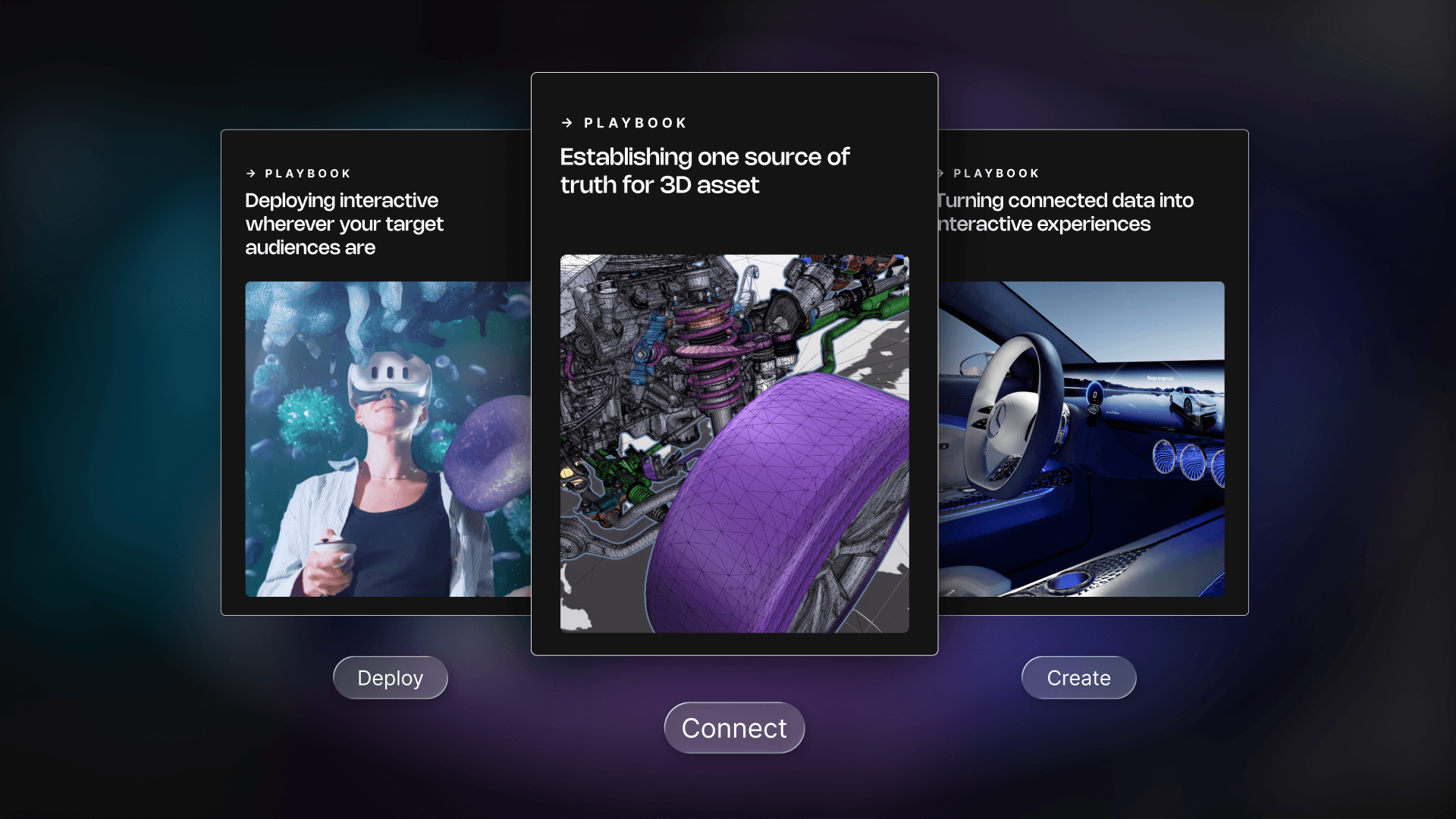
We are witnessing a fundamental shift in how industries design, build, and operate. The transition from static 2D documents to real-time 3D models is no longer just a trend; it is the new standard for operational excellence. Whether you are in manufacturing, architecture, or retail, the ability to visualize and interact with data in three dimensions is a critical competitive advantage.
However, moving from pilot projects to enterprise-scale adoption is difficult. Leaders often hit a wall where technical debt, data silos, and hardware limitations stall progress. You might have a brilliant digital twin, but if it sits on a single workstation disconnected from your field teams, its value is severely limited.
To help you navigate these hurdles, we have compiled three comprehensive playbooks. These guides move beyond theory, offering actionable checklists and frameworks to operationalize your 3D strategy.
Here is a look at the critical insights you will uncover in this series, covering everything from 3D asset management to final deployment.

The foundation: Unifying your 3D assets
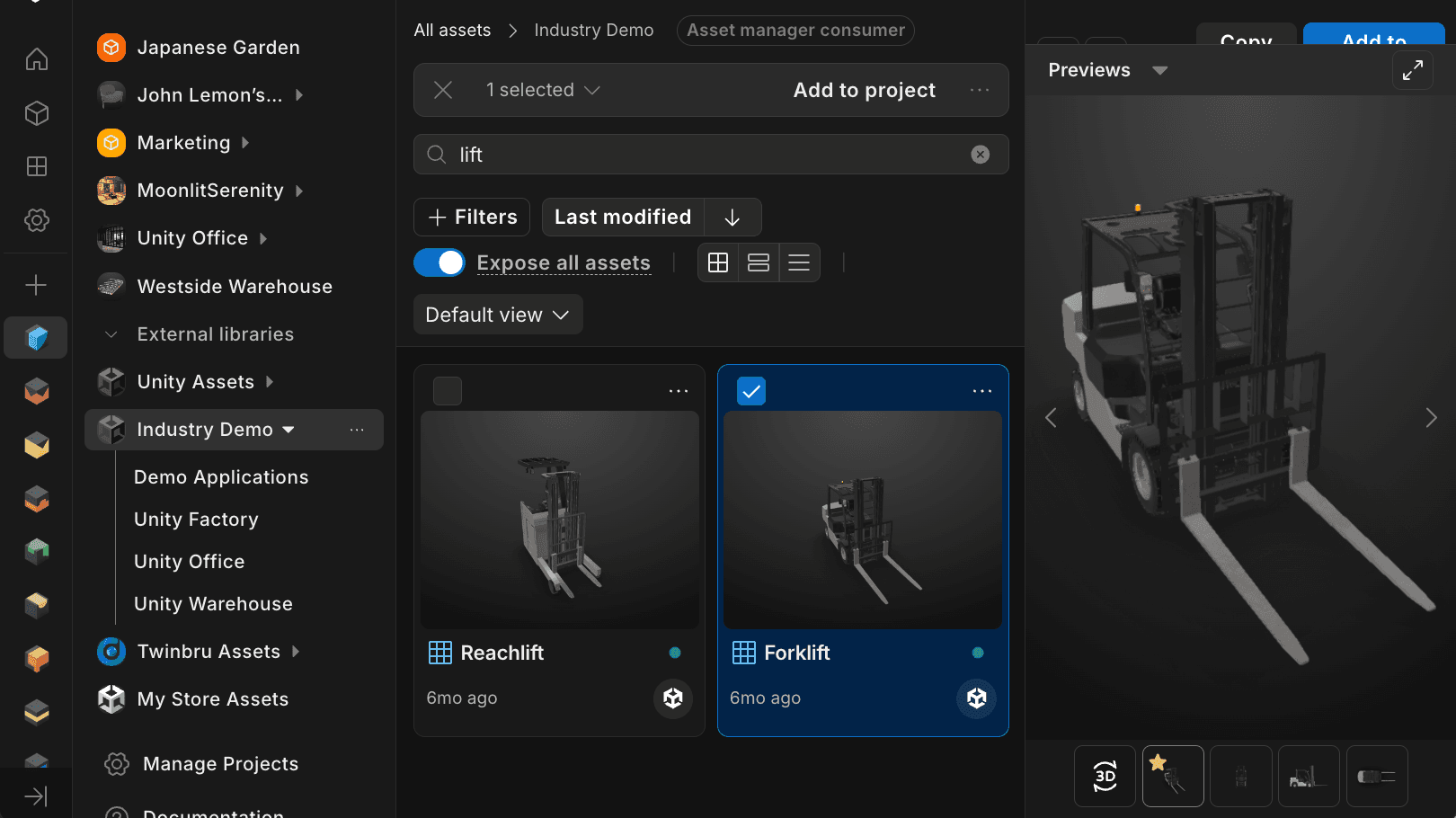
Before you can build immersive experiences, you must control your data. Many organizations suffer from "asset chaos." Engineering teams use CAD software, marketing teams use visualization tools, and training teams use learning management systems. These groups rarely follow the same processes, leading to a fragmented ecosystem where 3D files are scattered across hard drives, often duplicated and sometimes outdated.
Playbook 1: Establishing one source of truth for 3D asset data addresses this specific pain point. It challenges the inefficiency of silos and proposes a "single source of truth."
When you download this playbook, you will learn how to:
- Establish a centralized repository: Move away from scattered folders and into a governed environment where every asset is tracked, versioned, and accessible.
- Preserve metadata: Learn why stripping metadata during import destroys value, and how to keep hierarchy, identifiers, and material information intact so your models remain intelligent.
- Implement role-based access controls (RBAC): Security matters. We outline how to grant access to approved models only, ensuring that sensitive intellectual property remains protected while still being accessible to those who need it.
The guide also provides a practical 30-day checklist to centralize your assets. If you are tired of engineers wasting hours searching for the "final_final_v2" file, this playbook provides the governance structure you need.

The transformation: Building interactive simulations
Once your assets are organized, the next step is transforming them into value. A static 3D model is useful, but an interactive simulation drives business results. This is where interactive 3D experiences truly shine.
Playbook 2: Turning connected data into interactive 3D experiences focuses on the "behavior" of your models. It guides product and training leaders on how to take raw 3D data and imbue it with real-world physics and logic.
This playbook explores the concept of "Minimum Viable Realism." You don't always need photorealistic graphics; sometimes, accurate physics and interaction are more important for a simulation.
Key takeaways from this guide include:
- Connecting real-time data: How to integrate IoT and contextual data so your digital twin reflects the current state of the machine, not just how it looked on the day it was designed.
- Balancing visuals and performance: Insights on tuning visual fidelity to match the use case. A marketing configurator needs to look perfect; a field service guide needs to load instantly.
- Measuring outcomes: How to move beyond vanity metrics and demonstrate the proof of value for your 3D initiatives.
Whether you’re looking to build simulations that improve training outcomes or digital twins that enhance decision-making, this playbook bridges the gap between raw data and usable application.

The delivery: Deploying at scale
The final hurdle is often the hardest: the "last mile" of delivery. You can build the most sophisticated application in the world, but it fails if your target audience cannot run it on their devices.
Playbook 3: Deploying interactive 3D wherever your target audiences are tackles the complexities of device fragmentation. In an enterprise setting, you cannot guarantee that every user has a high-end gaming PC. You must be able to deliver that experience to tablets, mobile phones, AR headsets, and web browsers.
This playbook is designed for leaders who need to deliver creations at scale without friction. It addresses:
- Device-aware deployment: Strategies for assessing your audience's hardware landscape. We discuss how to plan for multiple levels of detail (LODs) so the same asset looks great on a desktop and runs smoothly on a mid-tier tablet.
- The "Last Mile" problem: How to avoid the common pitfall where interactive product demos falter because of bandwidth or hardware constraints.
- Phased rollouts: A strategic approach to scaling. Start with a single site or user group, monitor performance, and scale up only when stability is guaranteed.
This guide is essential for anyone responsible for the implementation of 3D technology in the field. It ensures that your investment in interactive 3D experiences actually reaches the hands of the people who need it most.
Why governance and strategy matter
The common thread across all three playbooks is that technology alone is not enough. Success requires governance, strategy, and a deliberate approach to data management. These playbooks include how to include governance in your 3D strategy to avoid any unwanted delays in your deployment plan.
Many companies treat real-time 3D as a visual upgrade - a way to make things look "cool." But the true value lies in connectivity and utility. When you treat 3D assets as critical data infrastructure, you unlock efficiency gains that ripple across the entire organization. You reduce rework in engineering, speed up training cycles, and close sales faster with better product demonstrations.
Start your journey toward operational excellence
The transition to real-time 3D is a journey, but you do not have to walk it alone. These playbooks represent the collective knowledge of experts who have helped the world's largest companies modernize their workflows.
Whether you are struggling with file management, trying to build your first interactive simulation, or figuring out how to deploy to thousands of mobile devices, there is a strategy here for you.
Don't let data silos or deployment friction slow you down. Equip your team with the knowledge to build a scalable, future-proof 3D strategy.
Header image credits: Random42, Mercedes-Benz Group Media