How Limbitless Solutions is redefining adaptive sports with real-time 3D

Subarna Ganguly Marshall - Unity
Contributor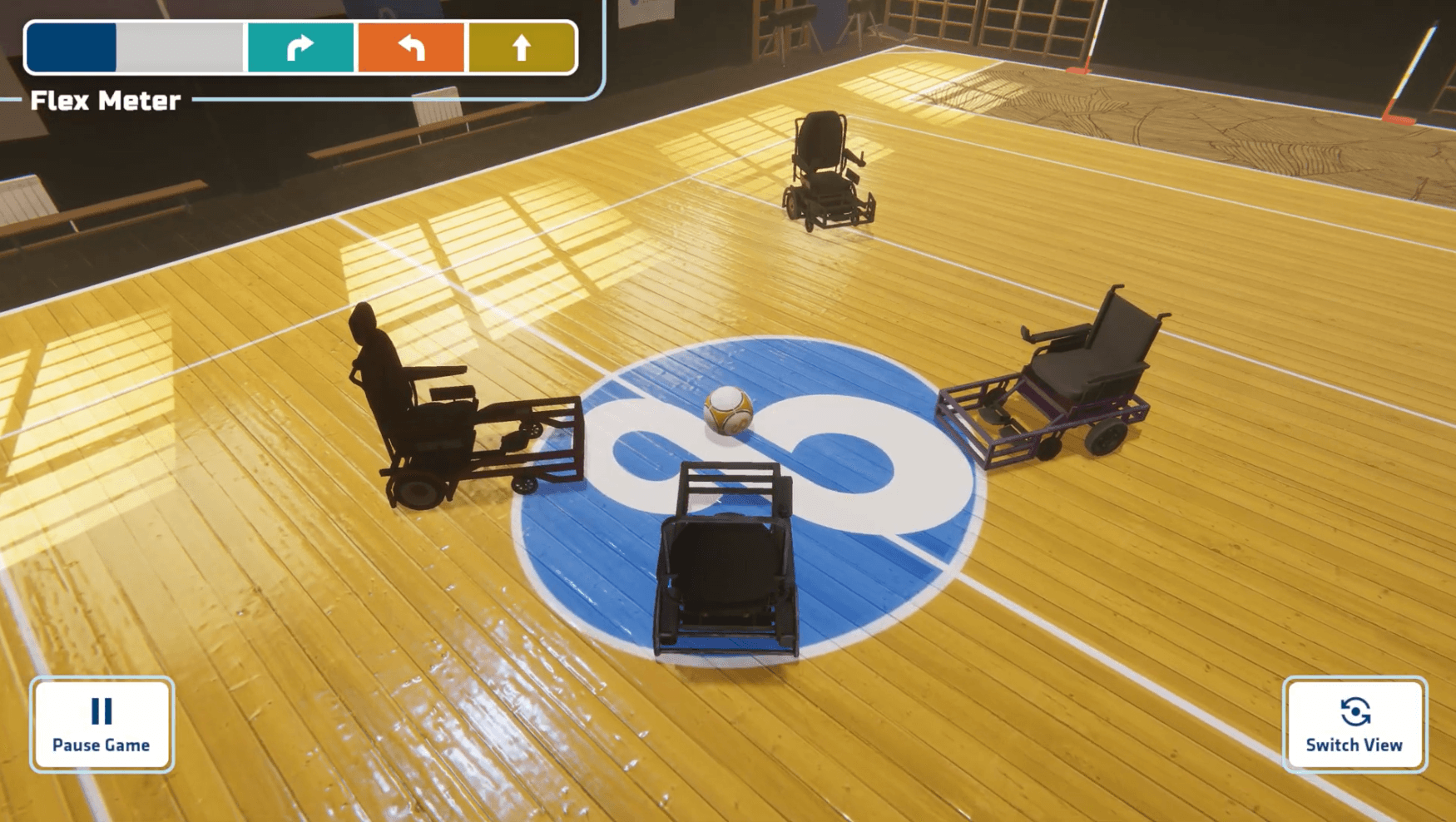
For many people living with progressive neuromuscular conditions, losing mobility often means losing access to the activities that once defined them. Sports become harder to participate in. Competition gives way to observation. And as physical abilities change, opportunities to build confidence, independence, and community can disappear.
But what if technology could help change that?
That's the vision behind Project Xavier, an innovative adaptive EMG controller developed by Limbitless Solutions, a nonprofit research organization at the University of Central Florida. Recognized as an Honourable Mention in the Unity for Humanity Awards 2026, Project Xavier is pioneering a new way for people with progressive neuromuscular conditions to compete, train, and maintain their independence using only facial muscle movements.
Powered by Unity, the platform transforms subtle facial muscle flexes into precise digital controls, allowing participants to engage in adaptive sports while simultaneously building the skills needed for real-world powered wheelchair navigation. By combining rehabilitation, competition, and play, Project Xavier is helping redefine what adaptive technology can achieve.
Video courtesy Limbitless Solutions.
Building on a legacy of accessible innovation
Project Xavier represents the latest milestone for Limbitless Solutions, whose mission is to combine engineering, medicine, and interactive technology to improve quality of life for people living with disabilities.
The organization is no stranger to Unity for Humanity. In 2023, Limbitless Solutions received a Unity for Humanity Award for its gamified bionic arm training platform, helping children learn to control prosthetic devices through engaging gameplay rather than repetitive clinical exercises.
Project Xavier extends that philosophy beyond prosthetics to mobility and adaptive sports.
Developed as part of the University's interdisciplinary research, the non-profit brings together undergraduate student game developers, researchers, engineers, artists, and clinicians to create technology with measurable real-world impact. Importantly, funding from Unity for Humanity directly supports these undergraduate developers, giving students the opportunity to build technologies that improve lives while gaining hands-on experience in accessible game development.

Image courtesy Limbitless Solutions.
Accessibility designed by people who understand it
One of the aspects that stood out most to the Unity for Humanity judges was the team's unique perspective.
Several members of the student development team have personal experience designing technologies for mobility devices in clinical settings. That lived experience allows them to identify accessibility challenges that are often overlooked when accessibility is treated as an afterthought.
Rather than designing for users, they're designing alongside the realities those users face every day.
That insider perspective influences everything from interaction design and control schemes to gameplay pacing and user comfort. The result isn't simply an accessible game, it's an experience purpose-built around the needs, capabilities, and aspirations of its players.

Image courtesy Limbitless Solutions.
Turning facial movement into athletic competition
At the heart of Project Xavier is an entirely new form of interaction.
Using facial muscle flex as the primary input, participants can navigate digital sports environments without relying on traditional controllers or hand-based inputs. This enables individuals experiencing upper limb weakness or reduced mobility to remain active competitors, even as their physical abilities evolve.
The platform blends competitive gameplay with practical skill development. As users participate in adaptive sports experiences, they also practice the spatial awareness, precision, and control required for operating powered wheelchairs safely in everyday environments.
Instead of separating therapy from recreation, Project Xavier combines the two into one meaningful experience—one that encourages users to continue building confidence while reconnecting with the excitement of competition.
This approach transforms repetitive training exercises into meaningful challenges that encourage continued participation while fostering confidence, independence, and social connection.
Powered by Unity’s game engine for Industry
Creating an experience that balances accessibility, responsiveness, and adaptability requires a flexible real-time 3D platform.
Unity provides the real-time 3D foundation that enables Project Xavier to deliver responsive, immersive, and adaptable experiences for a wide range of users.
Using Unity, the development team can:
- rapidly prototype new gameplay concepts
- refine interaction models through user testing
- iterate quickly as they gather feedback from participants and clinicians
The flexibility of Unity allows developers to customize experiences for different users while creating immersive digital environments that remain engaging over repeated training sessions.
Because the project is developed within an interdisciplinary academic environment, Unity also serves as a collaborative platform where engineers, artists, designers, healthcare professionals, and students can work together to bring new ideas to life.
The result is technology that is not only technically innovative but deeply informed by the people it is designed to support.
As research continues, the team can easily evolve gameplay mechanics, accessibility features, and training scenarios without rebuilding the experience from scratch.

Image courtesy Limbitless Solutions.
Expanding what's possible through play
The impact of Project Xavier extends beyond individual players.
For participants, it offers a way to remain active competitors while building practical skills that support greater independence. For families, it provides a motivating and enjoyable alternative to repetitive rehabilitation exercises.
For researchers and clinicians, it demonstrates how real-time 3D experiences can complement traditional therapy while generating valuable insights into adaptive mobility training.
And because every element of the platform is offered free of charge, the project removes financial barriers that might otherwise prevent access to these experiences.
Working alongside partners such as the Central Florida DreamPlex, Limbitless Solutions plans to continue expanding the platform with new sports, additional accessibility features, and broader research into adaptive digital athletics.

Image courtesy Limbitless Solutions.
A future where everyone can remain an athlete
Support from Unity for Humanity will help accelerate that vision.
The funding enables Limbitless Solutions to continue supporting its undergraduate development team while advancing research, expanding gameplay experiences, and validating the impact of adaptive digital sports for people living with progressive neuromuscular conditions.
Project Xavier is more than an innovative use of real-time 3D. It challenges the assumption that losing physical ability means losing the opportunity to compete.
By combining accessible design, interdisciplinary research, and the creativity of student developers, Limbitless Solutions is helping ensure that sport remains a place where everyone can belong.
Because sometimes technology doesn't just help people play differently; it helps them reclaim a part of themselves they thought was gone.