How to build a D2C webshop for your mobile game

Daniel Godley - Unity
Senior Content Marketing Manager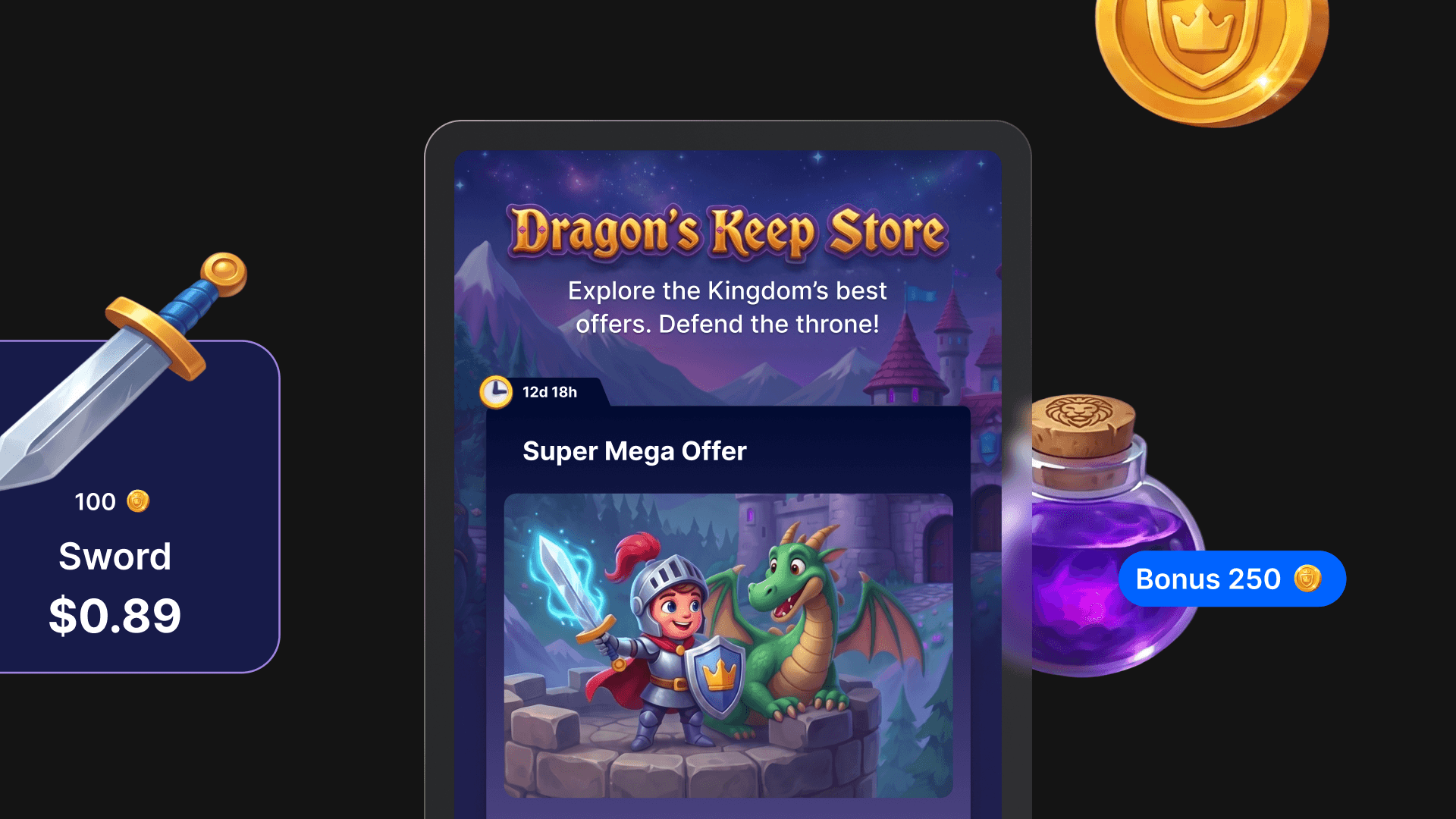
Para tu comodidad, tradujimos esta página mediante traducción automática. No podemos garantizar la precisión ni la confiabilidad del contenido traducido. Si tienes alguna duda sobre la precisión del contenido traducido, consulta la versión oficial en inglés de la página web.
Una tienda online de juegos para móviles es un comercio electrónico directo al consumidor (D2C) que permite a los desarrolladores vender artículos dentro del juego directamente a los jugadores a través de internet. Unity IAP 5.4 ahora ofrece compatibilidad con D2C, lo que te permite vender productos fuera de la plataforma directamente a tus jugadores junto con tu configuración de IAP existente, incluida una tienda web gratuita alojada en Unity.
La justificación comercial para las tiendas online puede ser convincente , pero solo si está bien elaborada. Una tienda que se siente desconectada del juego, que oculta su propuesta de valor o que no da a los jugadores ningún motivo para volver, tendrá un rendimiento inferior independientemente de la oportunidad de margen de beneficio. El éxito de una tienda online a menudo depende de un puñado de decisiones tomadas durante la fase de desarrollo. Esta guía explica cómo hacerlos correctamente.
Conclusiones clave de esta guía:
- Diseño para facilitar su descubrimiento. Algunos estudios optan por ubicar su tienda en línea en un lugar poco visible por precaución, evitando así incentivar el gasto antes de que los jugadores hayan adquirido el hábito dentro del juego. Pero los jugadores no pueden realizar conversiones a través de una tienda cuya existencia desconocen. Crea el punto de entrada en un lugar donde los jugadores puedan encontrarlo fácilmente y haz que su valor sea evidente. Si un jugador tiene que deducir por sí mismo que la tienda online es la mejor opción, es posible que ya lo hayas perdido.
- Genera confianza a través de la familiaridad. Los jugadores abandonan un entorno conocido para realizar una compra. Adapta fielmente la paleta de colores, los recursos gráficos y los patrones de la interfaz de usuario al juego. Si la transición da la sensación de ser un producto diferente, puedes perder clientes y socavar la confianza.
- Comience con ofertas específicas. Para empezar, utilice un catálogo simplificado. Primero divisas fuertes, y luego algunos paquetes de alto valor. Un catálogo limpio con una propuesta de valor clara puede generar mejores resultados, especialmente si los jugadores no están acostumbrados a la experiencia de compra en línea.
- Ofrecer productos exclusivos para crear un destino. Un descuento les da a los jugadores un motivo para comprar a través de la tienda online, pero una exclusividad les da un motivo para volver.
- Motivar el regreso del hábito. Las recompensas diarias, los puntos de fidelidad y las misiones contribuyen a que los jugadores sigan regresando. El objetivo es convertir a un cliente que compra por primera vez en un cliente habitual.
1. Hacer de la visibilidad una prioridad absoluta
El grado de promoción que se le puede dar a la opción web en relación con la IAP, y si se puede anunciar una ventaja de precio, viene determinado por las normas de la plataforma, que varían según la tienda y están en constante cambio. Actualmente, esas normas son más permisivas en algunos mercados que en otros, y son objeto de litigios en curso. Antes de continuar, revise las políticas pertinentes para su tienda online y su mercado.
En lo que respecta al punto de acceso, las tiendas online de muchos juegos están ocultas dentro de la aplicación, lo que dificulta su descubrimiento. La razón es comprensible: a algunos desarrolladores les preocupa que pedir a los jugadores que salgan de la aplicación para completar una transacción pueda generar fricción y perjudicar la conversión. Si bien ese razonamiento es válido, sobre todo para los jugadores que aún no han desarrollado el hábito de realizar compras dentro de la aplicación, conlleva una importante desventaja en cuanto a la visibilidad del juego.
Y si los jugadores no encuentran una tienda online o desconocen su existencia, no podrán realizar la conversión a través de ella. A menudo es mejor hacer que tu tienda online sea fácilmente localizable y posicionarla como un canal más. Para contrarrestar las dificultades que supone visitar la tienda online, se debe indicar claramente el beneficio para los jugadores y ofrecer incentivos.
Deje claro que los jugadores tienen la opción de elegir dónde completar la transacción y asegúrese de que conozcan las ventajas y desventajas de cada opción: La compra dentro de la aplicación es inmediata, pero una tienda en línea suele ser más barata y ofrece productos exclusivos.
Cómo hacerlo:
- Muestra tu tienda online de forma visible para que sea fácil de encontrar. Deje claro que el jugador puede elegir dónde prefiere completar la transacción.
- Ofrezca a los jugadores un incentivo, como un descuento o un paquete, para que completen sus compras a través de la tienda en línea. Coloca el mensaje sobre el valor añadido en la parte superior de la página, antes del catálogo, comunicando que los jugadores obtienen más valor al comprar a través de la web, para que conozcan las ventajas. El objetivo es equilibrar la fricción que supone salir de la aplicación con el valor añadido de completar la transacción en la tienda online.

2. Adapta la identidad visual y la marca al juego.
El paso de la aplicación al navegador puede suponer un momento de fricción. Los jugadores se dan cuenta inmediatamente cuando cambia la experiencia visual y se les pide que introduzcan sus datos de pago en un sitio web que no es la App Store ni Google Play. La confianza es fundamental en este momento: cuanto más desconocida o de menor calidad parezca la experiencia, mayor será la probabilidad de que los jugadores se marchen.
Las mejores tiendas online minimizan esta fricción replicando fielmente la apariencia y la sensación del juego: la misma paleta de colores, el mismo diseño de los personajes, la misma iconografía y los mismos patrones de interfaz de usuario. El objetivo es que la tienda online se perciba como una extensión natural del juego, no como un producto aparte.
Cómo hacerlo:
- Aplica la paleta de colores del juego a todos los fondos, botones, encabezados y tarjetas.
- Crea familiaridad exportando el arte de los personajes, las imágenes de los héroes y la iconografía que se utilizan en la tienda del juego y usa los mismos recursos en tu tienda online.
- Reflejar los patrones de la interfaz de usuario del juego. Por ejemplo, si un juego utiliza cartas redondeadas con un estilo de borde específico, reprodúzcalo en la disposición de la tienda.
- Comprueba la orientación predeterminada del juego. Si el diseño es horizontal, tu tienda online debería visualizarse en formato horizontal en dispositivos móviles. Son los pequeños detalles los que garantizan una experiencia impecable.

3. Comienza el catálogo de tu tienda online con los artículos básicos del juego.
No todo lo que se vende dentro del juego se adapta bien a una tienda online. La propuesta más clara para empezar en una tienda online es la moneda fuerte, ya que es sencilla, universal y fácil de descontar. Los paquetes de alto valor también funcionan bien como primera o segunda oferta para una tienda online. Mantén el catálogo inicial centrado: una tienda ordenada convierte mejor que una desordenada.
Una mejora que merece la pena implementar desde el primer día: un artículo de entrada o paquete de inicio a bajo precio que resulte lo suficientemente atractivo como para que los jugadores estén dispuestos a pagar por él. Los jugadores están facilitando sus datos de pago a un sitio web que no es la App Store ni Google Play, y muchos prefieren realizar una pequeña compra primero o necesitan comprobar que el producto ofrece suficiente valor, ya que la decisión de realizar la primera compra conlleva muchos inconvenientes.
Cómo hacerlo:
- Empieza con paquetes o conjuntos de divisas fuertes. Evita replicar la tienda del juego completa el primer día.
- Si añades paquetes, elige dos o tres de alto valor y con un atractivo evidente.
- Incluye al menos un artículo de bajo precio para que los compradores primerizos puedan probar la tienda a un precio económico.
- Ordena tus SKU de forma deliberada. Coloca la opción con mejor relación calidad-precio donde la vista se dirija primero, normalmente en la parte superior izquierda o en la parte superior central.
4. Ofrece artículos exclusivos de la tienda online.
El precio por sí solo no siempre es suficiente motivación para cambiar el comportamiento. Una vez que tu tienda online esté configurada con tu oferta inicial simplificada, es hora de empezar a pensar en los productos exclusivos para la tienda online. Los artículos exclusivos de la tienda online ofrecen a los jugadores un motivo para visitarla que va más allá del ahorro de dinero, lo que ayuda a convertir la tienda online en un destino en lugar de un simple mostrador de pago más económico. Los artículos que se pueden comprar, como cosméticos, contenido por tiempo limitado y paquetes exclusivos, crean urgencia y les dan a los jugadores con espíritu comunitario algo que compartir.
Cómo hacerlo:
- Identifica uno o dos artículos, como un cosmético, un aspecto de personaje o un paquete limitado, que puedas reservar por completo para la tienda del juego.
- Etiquételos claramente como exclusivos de la tienda online. La exclusividad es el principal atractivo; asegúrate de que los jugadores sepan que no está disponible en ningún otro lugar.
- Aprovecha las ofertas exclusivas por tiempo limitado siempre que sea posible. "Disponible hasta el domingo" suele tener mejor resultado que "Disponible en cualquier momento".
- Comparte ofertas exclusivas a través de canales comunitarios como Discord, redes sociales o correo electrónico. A menudo, los jugadores que sienten que están teniendo acceso a algo que otros podrían perderse son más propensos a actuar.

5. Utilice mecanismos de retención de jugadores para crear hábitos de compra en línea.
La primera visita de un jugador a la tienda online es solo el primer paso para construir una relación entre él y tu canal de venta directa al consumidor. Las tiendas que generan ingresos significativos suelen ser aquellas a las que los jugadores regresan con regularidad, idealmente como un hábito y no como una visita puntual. El objetivo es convertir a un cliente que compra por primera vez en un cliente habitual.
Cómo hacerlo:
- Añade una recompensa diaria gratuita que solo podrás canjear a través de la tienda online. No es necesario que sea de gran valor; incluso un pequeño paquete de moneda virtual o un artículo consumible es suficiente. El objetivo es crear el hábito de volver a la tienda.
- Haz que la recompensa diaria mejore gradualmente a lo largo de una racha. Este es el mismo mecanismo que funciona para incentivar los inicios de sesión diarios en el juego.
- Utilice incentivos para la repetición de comportamientos para crear hábitos. Algunos ejemplos son los sistemas de puntos de fidelidad, donde cada compra acumula puntos canjeables por recompensas, y las tareas sencillas y dirigidas ("visita la tienda tres días seguidos") que recompensan su finalización y enseñan a los jugadores el funcionamiento de la tienda, a la vez que les dan motivos para volver.
- En la primera visita de un jugador, invítelo a agregar la tienda en línea a su pantalla de inicio. Esto facilita las devoluciones y posiciona tu tienda online como una parte normal de la experiencia de usuario con su dispositivo y sus juegos.
- Trata tu tienda online como un centro comunitario para tu juego. Crea un espacio al que los jugadores quieran regresar con actualizaciones de juego únicas, funciones para la comunidad y guías. Este es un objetivo a largo plazo que requiere inversión, pero que probablemente atraerá más tráfico y ofrecerá una mejor experiencia al jugador.
Crea tu tienda online con Unity.
Las prácticas descritas en esta guía funcionan mejor cuando se implementan desde el principio. La solución de tienda online de Unity está diseñada teniendo eso en cuenta. Los precios específicos para la web, los precios originales tachados y las insignias de promoción de rebajas, bonificaciones y ofertas limitadas vienen incluidos de serie, por lo que el valor que los jugadores necesitan ver es obvio.
La familiaridad con el usuario se gestiona durante la configuración. Funciones como el diseño de tiendas web asistido por IA toman tu ficha existente en la App Store o Google Play, capturas de pantalla o imágenes subidas y generan una tienda que coincide con la identidad visual de tu juego, de modo que la transición de la aplicación al navegador no se siente como un salto a una experiencia diferente.
Y si ya utilizas Unity IAP, la tienda online no requiere ninguna integración adicional. Para los usuarios de Unity IAP, el catálogo que ya tienen es el mismo que utiliza la tienda web de Unity, con el mismo SDK y el mismo panel de control. Empieza con moneda física, añade paquetes cuando estés listo y reserva los artículos exclusivos de la web que les den a los jugadores un motivo para regresar, todo desde el mismo lugar.
Lo mejor de todo es que, aparte de las comisiones por procesamiento de pagos de terceros establecidas por los proveedores, Unity no cobra ninguna comisión por crear u operar tu tienda online. No estás obligado a utilizar un único socio de pago, y cambiar de proveedor no requiere modificar tu catálogo ni ninguna integración adicional. El objetivo es eliminar la mayor parte posible de la carga y el coste de desarrollo, para que puedas centrarte en las decisiones que impulsan las conversiones y ofrecen una mejor experiencia a tus jugadores.