
2024 Unity Gaming Report

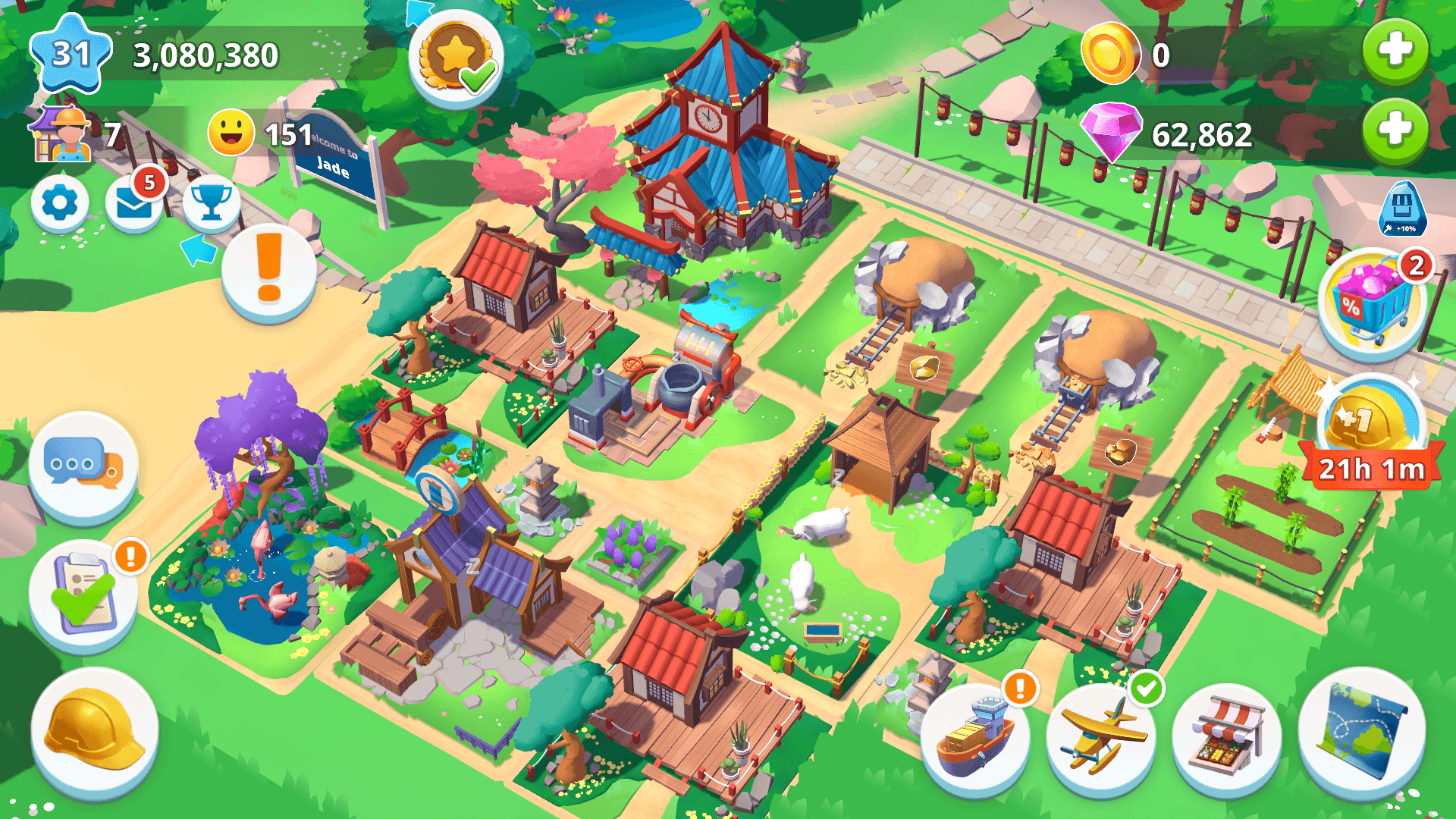
Southfield by Radical Forge
Seismic changes are reshaping the game development landscape. On one hand, games have greater cultural impact than ever: More people are playing bigger hits on increasingly powerful hardware; film and media adaptations of game IPs are crushing both box office figures and critical reception; and, as a broad category, video games have been out-earning film and music for years.
On the other hand, the industry has been plagued by deep cuts, layoffs, and studio closures. Tried-and-true business models seem shaky in the face of changing ad dynamics and stagnant post-pandemic revenue. Last year felt especially tumultuous as high interest rates made investors hesitant, new tools changed production capacities, and many players stayed busy with IRL activities.
In spite of the headwinds caused by structural changes in the economy and gaming business, the long-term future of the gaming industry seems bright. While these shifts are playing out, though, studios need to read the signs and adapt to remain competitive.
Most devs just want to stay head down and focus on projects. But thriving in a challenging market means getting ahead of trends to plan effectively, maximize resources, launch on time, and play the long game. Working smarter requires low-risk tactics that improve the chances for success.
Our data shows gamedevs navigating challenges and adapting to changes in technology, the economy, and player habits by doing more with less. Studios are stretching the value of their IPs, boosting productivity using AI tools, squeezing more revenue from diverse ad strategies, and doubling down on safe bets like multiplayer games and multiplatform reach.
This guide draws on data from approximately five million¹ Unity Engine developers and over 342 billion² ad views. Analysis also integrates insights from polls, surveys, and Unity’s broad community of industry veterans, studio partners, and in-house experts to enable better strategic planning.

Sunshine Island by New Moon Production
Read on to find data-backed trends, practical tips from studios, and actionable insights on how to use this information effectively in development planning and operations.
These are the trends shaping game development
 1
Devs are adopting AI tools to save time.
2023 will go down in history as the year that AI was suddenly everywhere – and that’s true in game development as well. 62%³ of the studios we surveyed said they used AI in their workflows, mainly to prototype quickly and for concepting, asset creation, and worldbuilding.
 2
Studios are diversifying their revenue approaches.
As in-app purchase (IAP) average revenue per daily active user (ARPDAU) declines, in-app advertising (IAA) ARPDAU is on the rise. Studios are broadening their mix of IAA strategies, and games using both rewarded videos and offerwall are reaping an increase of 4% and 2% in Day 7 and Day 30 retention.
 3
Studios of all sizes are shipping to more platforms.
While multiplatform reach adds challenges, more devs are deciding it’s worth it, especially indies. Between 2021 and 2023, multiplatform games have grown 40% proportionally. While studios with limited resources largely stuck to single-platform release strategies in 2022, they’ve built 71% more multiplatform games over the past two years.
 4
Devs prioritize multiplayer games despite greater complexity and cost.
For many people, the social dimension of gaming is a must, and studios are responding to this demand. In 2023, mobile-only games with multiplayer features had 40.2% more monthly active users (MAU) than single-player games, and multiplayer gaming revenue grew by $2.3B – that’s a 10% lift overall.
5The industry is building stronger brands by extending engagement.
Studios are looking to extend the lifespans of their game IPs by deepening audience attachment. Analytics services, used to tailor updates to players, increased by 44%, while 27% of the developers we polled report incorporating user-generated content (UGC) into their games to invite greater engagement.
About the data
The data in this report is drawn from the Unity Engine, Unity Cloud, and ironSource from Unity portfolio of products, including games made with Unity that are sending events through the platform. These solutions span mobile, PC, and console gaming, giving a unique high-level overview of the industry.
Additional data for this report comes from a survey of game developers who were invited to participate via various means such as social media advertisement, Unity customer emails, and community channels. In total, 300 respondents completed the Cintᵀᴹ survey with a margin of error of +/-6%.
Other data sources include The Harris Poll’s The State of Toxicity & Cross-Platform Play in Today’s Multiplayer Games: 2023 Edition, a Unity-procured survey of 407 developers with a margin of error of +/-5%. As well, there was a Unity Sentis beta user survey of 7,062 respondents with a margin of error of +/-2%, an asset management collaboration survey of 120 developers performed by Unity with a margin of error of +/-9%, and a 2023 Statista Digital Market Insights report.
We take data privacy seriously and have omitted and anonymized information from this report that would individually identify any single game, developer, or publisher. Games are broken out into publicly available categories as defined on the iOS and Google Play stores where available. Although we also include outside sources of information, the data shown in the charts and graphics is original to Unity. In addition, we are grateful to those members of the industry whom we interviewed for this report, many of whose contributions are quoted throughout.

CONV/RGENCE: A League of Legends Story by Double Stallion Games
Here’s how we grouped studio sizes for this report: Indie: 1–9 people Midsize: 10–49 people Lower midmarket: 50–149 people Upper midmarket: 150–299 people Large studios: 300+ people

Chapter 1
Devs are adopting AI tools to save time.
Studios want to work faster and more efficiently.
The average time to launch for games increased from 218 days in 2022 to 304 days for 2023⁴. Studios are spending more time in development before earning returns on their investments, and they need to find ways to get to market faster. But exploring tools to speed up production comes with challenges. As Chart 1.1 shows, 40% of the studios surveyed face long R&D times while trialing new technologies, and 37% say they struggle to integrate and manage their tools and systems.
QUICK CHART ACCESS
- 1.1 Studios face challenges when adopting new technologies.
- 1.2 Studios are using AI for content creation and animation improvement.
- 1.3 Most developers have a short window for prototyping.
- 1.4 Textures and materials are the most-used premade assets.
- 1.5 Developers harness AI to create NPCs.
- 1.6 AI is most commonly used for AR/VR and online multiplayer games.
- 1.7 Lack of time or know-how is the biggest blocker to AI tool adoption.
- 1.8 Studios work with a lot of assets.
- 1.9 A look at how studios spend time dealing with assets.
- 1.10 Version control is the most prized feature of a Digital Asset Management (DAM) solution.
- 1.11 DevOps tools support code safety and stability.
1.1: Studios face challenges when adopting new technologies.
Studios report on their top-three pain points
| Pain points | 1.1: Studios face challenges when adopting new technologies. |
|---|---|
| Encountering long R&D times while trialing new technologies | 40% |
| Managing and integrate tools and systems | 37% |
| Keep project organized, in scope, and on time | 31% |
| Collaborating as a distributed/hybrid team | 25% |
| I don’t have enough time | 10% |
“Players are setting the bar higher these days, and this has an impact on production. Studios need to make sure that they can actually reach the expectations of those players, and production becomes more costly and takes more time.”

Timothy Vanherberghen
Founder and CEO, Triangle Factory

Breachers by Triangle Factory
Studios are bringing AI into existing workflows.
As they look to shave time off the game development cycle, many are excited about AI tools and the potential efficiencies they offer.
In 2023, a Unity study⁵ showed that 71% of the studios that are using AI say that it’s improved their delivery and operations.
Chart 1.2 shows that 37% of surveyed devs say they are using AI to accelerate writing code, while 36% are generating artwork and game levels, testing gameplay loops, and automating narrative elements.
1.2: Studios are using AI for content creation and animation improvement.
How developers are using AI
| Use of AI | 1.2: Studios are using AI for content creation and animation improvement |
|---|---|
| Improving character animations | 46% |
| Writing code/speeding up code writing | 37% |
| Generating artwork and game levels | 36% |
| Writing and narrative design | 36% |
| Automated play testing | 36% |
| Adaptive difficulty | 35% |
| In-game text and voice chat moderation | 33% |
71% of studios that report using AI say it’s improved their delivery and operations.
“I am experimenting with AI. There are many disciplines that go into making a game, and I am trying to understand how each and every one of them can benefit from it, like tools that can aid prototyping and content generation, level design, and narrative. I think there’s a whole universe that goes into workflows and analysis of data and analytics, so there’s so much that can be done with AI that can boost productivity at every level.”

Fabio Franconeri
Head of Games Engineering, SYBO
1.3: Most developers have a short window for prototyping.
Length of time developers spend prototyping
| 1.3: Most developers have a short window for prototyping | |
|---|---|
| Under a week | 3% |
| Under a month | 39% |
| Under three months | 54% |
| Over six months | 4% |

My Talking Tom Friends by Outfit7 Limited
Starting a game from scratch is exciting for most developers, but it can also be daunting.
Ideation comes with a lot of brainstorming and false starts exploring gameplay loops. In a 2023 survey⁶, 68% of developers who use AI counted its ability to accelerate prototyping and concepting work as one of their main reasons.
As game development schedules get longer, devs hope that quick conceptualization will either shorten shipment cycles or give them more time to focus on optimization and strategy planning. Chart 1.3 shows that in 2023, 96% of the studios polled were spending three months or less prototyping, compared to 85% of studios in 2022.
“I’ve used AI for quick prototypes when I wanted to test out something without writing any boilerplate code. It was super useful for me.”

Miha Rataj
Principal Software Engineer, Outfit7 Limited
1.4: Textures and materials are the most-used premade assets.
Premade asset choices
| Premade asset choices | 1.4: Textures and materials are the most-used premade assets |
|---|---|
| Textures and materials | 17% |
| Scripts and code | 16% |
| 3D assets for games | 13% |
| Animations | 11% |
| 2D images and sprites | 10% |
| Audio files | 10% |
| 3D assets for VFX | 8% |
| Video files | 6% |
| 3D scan data | 5% |
| Other | 5% |

Peridot by Niantic
Chart 1.4 shows that both artists and developers are incorporating premade assets into their workflows, using them mostly to create with textures and materials or scripts and code.
In 2023, developers are exploring and trying out new ways to get things done: 63%⁷ of the surveyed devs who are adopting AI tools use generative tech for asset creation.
“To increase our productivity, like many others, we’ve been really looking at AI and seeing how we can use this new generation of tools to empower our designers so they can create new assets to explore new ideas. Also, how we can prototype new ways of characters, bring them to life, and have them animate in new ways.”

Kjell Bronder
VP, Product Management, Niantic
1.5: Developers harness AI to create NPCs.
AI elements for worldbuilding
| AI elements | 1.5: Developers harness AI to create NPCs |
|---|---|
| Non-playable characters (NPCs) | 64% |
| Creating one-of-a-kind experiences | 54% |
| Speech recognition and natural language processing | 52% |
| Body/object detection or classification | 43% |
| Image, video, or 3D model classification | 39% |
| User-generated content | 34% |
Developers are incorporating AI to immerse players in the game. Our survey⁸ data confirms that 56% of AI adopters use it for worldbuilding, and, as shown in Chart 1.5, 64% of those creators favor it for developing NPCs to populate these worlds.
56% of AI adopters say they use it for worldbuilding.
1.6: AI is most commonly used for AR/VR and online multiplayer games.
AI tool use by game type
| Game type | 1.6: AI is most commonly used for AR/VR and online multiplayer games |
|---|---|
| AR/VR | 29% |
| Online multiplayer | 28% |
| Casual | 27% |
| Open world | 25% |
| Role-playing | 25% |
| Strategy | 20% |
| Educational | 19% |
| Puzzle | 16% |
| First-person shooter | 15% |

Job Simulator by Owlchemy Labs
Prototyping and concepting, asset creation, and worldbuilding explain what studios most commonly adopt AI for, and Chart 1.6 shows what they are creating – 29% of surveyed AI users are making AR/VR games, with online multiplayer games coming in at a close second with 28%.
1.7: Lack of time or know-how is the biggest blocker to AI tool adoption.
Why studios don’t embrace AI
| 1.7: Lack of time or know-how is the biggest blocker to AI tool adoption | |
|---|---|
| I have an interest but not enough time | 43% |
| I or my colleagues don’t have the technical skills | 24% |
| I didn’t know that it was possible | 20% |
| I didn’t know the purpose | 10% |
| Other | 3% |
AI took off in 2023, however, 38%⁹ of the studios that responded to polls say they’re still reluctant to start. Chart 1.7 shows that 43% of surveyed developers who hesitate to try AI are interested but don’t have enough time, while nearly a quarter say they are uncertain they have the technical skills to use it correctly.
As more demos and documentation become available for AI features like Muse Chat, developers will have the chance to gain further clarity and gauge which solutions might be a good fit for their workflow.

Warhammer 40,000: Warpforge by Everguild
Devs are also looking to boost their efficiency with solutions beyond AI.
Too often, devs report that asset management issues cause delays. As a game’s concept gets closer to reality, focus shifts toward creating and refining the assets that will bring it to life. Chart 1.8 shows that nearly half of the gaming studios we polled work with 1,000+ assets, with midsize and larger studios most commonly working with 1,000 to 5,000 assets.
1.8: Studios work with a lot of assets.
Number of assets
| 1.8: Studios work with a lot of assets | |
|---|---|
| Less than 1,000 assets | 51% |
| 1,001 to 5,000 | 35% |
| 5,001 to 50,000 | 9% |
| 50,000+ | 5% |
The size of this library brings inefficiencies – 19%¹⁰ of the studios surveyed identify managing content across their organization as an issue, while 18% of indies point to asset duplication as a major pain point.
These obstacles, along with asset versioning, collaboration, and spending too much time searching for assets, contribute to workflow delays. Chart 1.9 shows that 20% of creators polled spend over four hours each week transforming assets’ formats and sizes to use them across different pipelines and applications.
1.9: A look at how studios spend time dealing with assets.
Time spent on asset management
| Less than 1 hour | 1-2 hours | 2-4 hours | 4-8 hours | More than 8 hours | |
|---|---|---|---|---|---|
| Organizing assets | 37% | 29% | 19% | 9% | 5% |
| Searching for the latest asset | 47% | 25% | 21% | 5% | 3% |
| Transforming asset format/size | 38% | 21% | 21% | 10% | 10% |
| Waiting to review/approve assets | 45% | 28% | 14% | 6% | 6% |
| Review/approve assets | 38% | 24% | 22% | 11% | 5% |
20% of surveyed developers spend 4+ hours each week reformatting and resizing assets to use across different pipelines and applications.
1.10: Version control is the most prized feature of a Digital Asset Management (DAM) solution.
What studios want in a DAM
| Not at all important | Slightly important | Moderately important | Very important | Extremely important | |
|---|---|---|---|---|---|
| Secure, centralized storage | 10% | 10% | 20% | 24% | 37% |
| Asset discoverability | 6% | 6% | 21% | 36% | 31% |
| Asset organization | 5% | 2% | 17% | 37% | 39% |
| Version control | 5% | 4% | 13% | 37% | 40% |
| Secure sharing and access control | 6% | 11% | 26% | 38% | 20% |
| Collaborative asset review | 14% | 26% | 27% | 24% | 9% |
| Efficient distribution to commerce channels | 31% | 23% | 19% | 16% | 11% |
| Automated asset processing | 10% | 11% | 38% | 28% | 14% |
| 3D data transformation | 14% | 13% | 30% | 25% | 17% |
To combat asset management bottlenecks, developers are looking for solutions that are simple to use, easy to integrate, and save them time.
Chart 1.10 shows that surveyed creators believe that asset organization, version control, and asset discoverability are the most important attributes when using DAM solutions like Unity Asset Manager, which reduces friction by automating asset versioning and access.
“Cloud services have a lot of things to offer. It will help smaller teams achieve things that were previously only possible for larger teams with dedicated server engineers.”

César Ríos
Game Director, Everguild

Warhammer 40,000: Warpforge by Everguild
51%¹¹ of studios polled say they are embracing DevOps tools as another time-saving solution.
As Chart 1.11 shows, devs adopt tools like Unity Version Control for better code safety, stability, and quality, as well as to improve security, automation, and go to market faster.
1.11: DevOps tools support code safety and stability.
Why studios use DevOps
| Reason for DevOps usage | 1.11: DevOps tools support code safety and stability |
|---|---|
| Improved code safety and stability | 39% |
| Increased security | 36% |
| Automation and efficiency | 35% |
| Code quality improvements | 34% |
| Faster time to market | 30% |
| Improved communication and collaboration | 28% |
| Scale infrastructure and development processes | 27% |
“In the DevOps space, disparate information streams are a challenge, especially when dealing with emerging or live issues. I think teams are hungry to understand interrelationships between data streams, such as stability tracking, live metrics, and user churn, and I could see a greater focus on tools to draw inferences and support looking at what matters, when it matters.”

Jeremy Burgess
Chief Technology Officer, PikPok

Rival Stars Horse Racing by PikPok
Productivity tips
Productivity tips
Timothy Vanherberghen, Founder and CEO, Triangle Factory
Lana Bachynski, Associate Art Director, The Riot Animation Team
“So the key ways in which I’ve been trying to promote productivity and efficiency have been about making hybrid work spaces as comfortable and collaborative as a space as in-person would feel. Some of the ways I’m doing that are finding new tools that allow people to embrace each other.”

Anahit Fernandez, Lead Producer, Navegante
“We continue to prototype in many cases with existing assets so that we don’t have to create everything from scratch. We can put it first into practice, and if it works, then we commit to creating those assets ourselves. This has continued to save us a lot of time for the next project.”

Sebastien Borget, Cofounder and COO, The Sandbox
How AI could help you
Resources
Resources


Chapter 2
Studios are diversifying their revenue approaches.
Free-to-play mobile gaming is full of opportunity.
Mobile is still going strong. But as the industry shifts, studios are hedging their bets by exploring new revenue streams to support their existing tactics. Many studios with live games are finding that sustaining revenue means tweaking the formula to drive greater retention and engagement. To help build a balanced game economy, the three main revenue channels for free-to-play mobile games are in-app advertising (IAA), in-app purchases (IAP), and offerwall, a user-initiated rewarded marketplace of offers. Each of these streams help create opportunities for players to interact with in-game content in various ways. Increasingly, success means staying close to the data to tailor a mix of tactics by region, game genre, and audience.
QUICK CHART ACCESS
- 2.1 Mobile gaming is sustaining growth.
- 2.2 The median mobile player retention is down slightly worldwide.
- 2.3 IAP revenue is down.
- 2.4 In-app purchase payer rates are decreasing.
- 2.5 In-app purchase transactions and average spend per payer remain steady.
- 2.6 IAA revenue is way up year over year.
- 2.7 Simulation, casual, and puzzle games are seeing growth in IAA revenue.
- 2.8 Games with diverse ad strategies show higher engagement.
- 2.9 Games using both rewarded videos and offerwall improve retention.
Here’s how we’ve classified the different markets
Tier 1 (T1): Includes the U.S., Canada, Australia, and Great Britain. These are countries with considerable purchasing power. Tier 2 (T2): Includes Denmark, Sweden, Norway, Finland, and Ireland. These countries have very high levels of English comprehension but slightly less purchasing power than T1. Rest of world (RoW): Includes countries not listed as T1 or T2 Worldwide (WW): Includes all countries across T1, T2, and RoW
Here’s how we measure data
The percentile is based on total revenue generated by a mobile game, with the 50th percentile (p50) indicating median revenue. The percentile is based on total revenue generated by a mobile game, with the 75% percentile (p75) indicating more of the top performing games.
How we measure player retention
D1, D7, and D30 are common retention metrics in the gaming industry. They refer to the percent of active users one, seven, and 30 days after installing a game.
2.1: Mobile gaming is sustaining growth.
Median DAU by app
| Year | 2.1 Mobile gaming is sustaining growth. |
|---|---|
| 2021 | 43,409 |
| 2022 | 43,146 |
| 2023 | 44,919 |
2023 continues to prove that mobile gaming is still growing. Chart 2.1 shows that worldwide DAU for mobile is up 4.1% in 2023¹², representing a 4.5% increase from 2022’s growth.
“We’re really excited about emerging markets. We’ve recently expanded in India and Indonesia, and there’s a lot of excitement from the player bases there. It’s been enlightening to experiment to see what resonates with players.”
Kjell Bronder
VP, Product Management, Niantic
2.2: The median mobile player retention is down slightly worldwide.
Year-over-year change in median retention rates
| Retention metric | Retention metric |
|---|---|
| Day 1 | -1% |
| Day 7 | -0.1% |
While there are more people playing mobile games overall, holding their interest is becoming a bigger challenge.
Players churn out quickly, with Day 1 and Day 7 being the most crucial hurdles to overcome when measuring retention. Chart 2.2 shows that mobile player retention is marginally down worldwide, with a decrease of 1.00% and 0.10% respectively in Day 1 and Day 7 retention.
“Competition and the maturity of the market have made it harder to retain players. There are more games than ever, and players have become more selective.”
Miha Rataj
Principal Software Engineer, Outfit7 Limited

My Talking Angela 2 by Outfit7 Limited
IAP revenue faces pressures, while IAA revenue is on the rise.
2.3: IAP revenue is down.
Median IAP ARPDAU revenue
| Year | 2.3: IAP revenue is down |
|---|---|
| 2022 | 0.02 |
| 2023 | 0.02 |
2.4: In-app purchase payer rates are decreasing.
Median IAP payer ratio
| Year | 2.4: In-app purchase payer rates are decreasing |
|---|---|
| 2021 | 0.7% |
| 2022 | 0.6% |
| 2023 | 0.5% |

Sunshine Island by New Moon Production
Chart 2.4 shows that the percentage of payers has dropped 0.15% between 2021 and 2023¹⁵.
On a different note, Chart 2.5 shows that IAP transactions per payer and average spend per payer have remained steady year over year¹⁶. The data indicates that this cohort of payers is fairly stable, however developers still need to find ways to encourage deeper gameplay and engagement to increase the number of payers and drive revenue.
2.5: In-app purchase transactions and average spend per payer remain steady.
Transactions and spend per payment
| Year | 2.5.1: Transactions per payer |
|---|---|
| 2021 | 1.46 |
| 2022 | 1.46 |
| 2023 | 1.46 |
| Year | 2.5.2: Value per transaction (USD) |
|---|---|
| 2021 | 7.9 |
| 2022 | 7.89 |
| 2023 | 8.15 |
“The overall IAP market has gone down slightly this year. I think we are still feeling the post-COVID impacts and are working to find the right audience at the right price.”

Carlos Guzmán Pérez
Game Director, New Moon Production
2.6: IAA revenue is way up year over year.
IAA ARPDAU growth
| Year | 2.6: IAA revenue is way up year over year |
|---|---|
| 2022 | 0.03 |
| 2023 | 0.04 |
IAA ARPDAU is seeing major growth. It’s up 26.7% year over year.
2.7: Simulation, casual, and puzzle games are seeing growth in IAA revenue.
Year-over-year change in IAA and IAP revenue
| % of IAA YoY Change | % of IAP YoY Change | |
|---|---|---|
| Arcade | 30% | -30% |
| Casino | 16% | -16% |
| Hypercasual | 3% | -3% |
| Kids and family | 13% | -13% |
| Lifestyle | 7% | -7% |
| Other casual | 33% | -33% |
| Puzzle | 31% | -31% |
| Racing | 4% | -4% |
| RPG | -2% | 2% |
| Shooter | -1% | 1% |
| Simulation | 41% | -41% |
| Sports | 10% | -10% |
| Strategy | 4% | -4% |
In Chart 2.7, you can see IAA’s success in certain game genres, particularly in simulation (41%), casual (33%), and puzzle (31%) games that have experienced a significant increase in daily IAA revenue¹⁹. Data also shows that while there’s opportunity for IAA in some genres with large growth, others are still benefiting from IAP, such as RPG (2%) and shooter (1%) games.
Studios are diversifying their monetization strategies.
2.8: Games with diverse ad strategies show higher engagement.
Daily active sessions by ad format
| Ad format strategy | 2.8: Games with diverse ad strategies show higher engagement |
|---|---|
| Rewarded video and offerwall | 3.12 |
| Rewarded video only | 2.62 |
| Offerwall only | 2.58 |
| No rewarded ads | 2.1 |

Zooba: Feral Multiplayer Mayhem by Wildlife Studios
In 2023, coupling monetization tactics has proven successful.
Chart 2.8 shows that games that include both rewarded videos and offerwall have an average of just over three daily active sessions, compared to a little more than two daily average sessions for games with no rewarded IAA strategy²⁰.
“There is some strategy to making the most out of your placements. If you have three placements that entice the same kind of user you're probably not making the most money out of your whole portfolio of placements. We are trying to maximize both engagement and the number of ads people watch.”

Marcelo Reznicek
Ad Monetization Manager, Wildlife Studios
2.9: Games using both rewarded videos and offerwall improve retention.
Ad formats and retention
| Rewarded video and offerwall | Rewarded video only | Offerwall only | No rewarded ads | |
|---|---|---|---|---|
| D7 | 12% | 10% | 10% | 8% |
| D14 | 8% | 7% | 7% | 5% |
| D30 | 5% | 4% | 4% | 3% |
| D60 | 3% | 2% | 3% | 2% |
| D90 | 2% | 2% | 2% | 1% |
Doubling up on ad formats also helps with retention. As Chart 2.9 shows, games that use both rewarded videos and offerwall retain players better than those without a rewarded strategy, netting an increase of 4% and 2% in Day 7 and Day 30 retention²¹.
Monetization tips
Monetization tips
Mattias Widmark, Head of Technology, Spin Master Digital Games
Murari Vasudevan, Technical Director, SYBO
“I think that people need to focus more on automated segmented offers, and using AI for designing user acquisition creatives and testing their performance.”

Marcelo Reznicek, Ad Monetization Manager, Wildlife Studios
“There are some new formats rising up particularly with native in-game ads like we use in Tennis Clash. This seems like an untapped opportunity and a space that will change over the course of the next few years. They are very non-intrusive in a way, which makes them appealing.”

Carlos Guzmán Pérez, Game Director, New Moon Production
“While broad audiences are important, games are finding success going after specific groups. I think it’s key to focus on attracting different niche audiences at a deep level with diversified monetization and engagement tactics, and fulfilling their needs. This will help increase a player’s long-term value.”

How to increase monetization strategy effectiveness
For in-app purchases (IAP)
For in-app advertising (IAA)
Resources
Resources


Chapter 3
Studios of all sizes are shipping to more platforms.
Studios of all sizes want to reach more players.
The benefits of shipping multiplatform are clear – more platforms means more potential players. This also adds a lot of risk, overhead, and complexity, but studios of all sizes are increasingly deciding that it’s worth it. Last year’s trends report showed a bump in larger studios releasing on more platforms, and this year sees smaller indies going for the same gains. With less investment and increased competition, studios are maximizing whatever resources they have for the greatest possible ROI.
QUICK CHART ACCESS
- 3.1 Smaller studios are shipping more games on multiple platforms.
- 3.2 More games are launching on 3+ platforms.
- 3.3 Studios plan multiplatform strategies early.
- 3.4 Mobile and desktop are more popular with studios of fewer than 50.
- 3.5 Developers are split on multiplatform rollout strategies.
- 3.6 RPGs lead in multiplatform development.
- 3.7 Developers are prioritizing cross-platform play.
3.1: Smaller studios are shipping more games on multiple platforms.
Multiplatform growth
| Number of multiplatform projects | Number of multiplatform projects by small studios | |
|---|---|---|
| 2021-01-01 | 35,471 | 14,120 |
| 2021-02-01 | 34,011 | 13,835 |
| 2021-03-01 | 42,295 | 17,294 |
| 2021-04-01 | 45,438 | 19,342 |
| 2021-05-01 | 46,330 | 19,385 |
| 2021-06-01 | 46,705 | 20,356 |
| 2021-07-01 | 43,190 | 18,873 |
| 2021-08-01 | 44,885 | 19,140 |
| 2021-09-01 | 45,805 | 19,702 |
| 2021-10-01 | 48,571 | 21,174 |
| 2021-11-01 | 51,333 | 22,417 |
| 2021-12-01 | 46,978 | 20,770 |
| 2022-01-01 | 49,959 | 20,548 |
| 2022-02-01 | 46,174 | 19,537 |
| 2022-03-01 | 49,362 | 21,356 |
| 2022-04-01 | 51,659 | 22,309 |
| 2022-05-01 | 55,372 | 23,636 |
| 2022-06-01 | 53,041 | 23,619 |
| 2022-07-01 | 51,777 | 22,626 |
| 2022-08-01 | 50,158 | 22,055 |
| 2022-09-01 | 50,109 | 22,470 |
| 2022-10-01 | 53,397 | 23,955 |
| 2022-11-01 | 54,562 | 25,175 |
| 2022-12-01 | 52,062 | 23,482 |
| 2023-01-01 | 52,933 | 22,925 |
| 2023-02-01 | 54,901 | 24,945 |
| 2023-03-01 | 59,163 | 26,430 |
| 2023-04-01 | 54,653 | 24,393 |
| 2023-05-01 | 57,929 | 26,229 |
| 2023-06-01 | 53,676 | 24,637 |
| 2023-07-01 | 54,128 | 24,429 |
| 2023-08-01 | 52,490 | 23,948 |
| 2023-09-01 | 50,168 | 23,385 |
| 2023-10-01 | 52,938 | 25,286 |
| 2023-11-01 | 52,035 | 25,447 |
| 2023-12-01 | 50,084 | 24,356 |

Greak: Memories of Azur by Navegante
Chart 3.1 shows that the proportion of multiplatform games has grown 40%.
While small studios largely stuck to single-platform release strategies in 2022, they’ve built 71% more multiplatform games over the past two years²⁷.
“Smaller studios are shipping on multiple platforms since it’s been easier to do so using tools like what Unity provides for us. Platform holders are also helping, giving expertise and development kits to indie studios to launch on multiple platforms. I think that’s helped tremendously.”

Anahit Fernandez
Lead Producer, Navegante
3.2: More games are being built on 3+ platforms.
Increase in multiplatform launches
| Year | 3.2: More games are being built on 3+ platforms |
|---|---|
| 2022 | 33,192 |
| 2023 | 44,411 |

CONV/RGENCE: A League of Legends Story by Double Stallion Games
In an attempt to increase awareness and potential audience, studios are looking to be where players are by bringing their games to as many platforms as they can.
As shown in Chart 3.2, there has been a 34% increase in games launching on three or more platforms between 2022 and 2023.
“Launching on multiple platforms has definitely become more accessible because of the tools that are available. When thinking about what platforms to consider, the biggest concern that we have is if we can deliver a playable experience on that platform. It’s also about performance. Can we get the right fidelity, graphics, and frame rate on the target platforms?”

Stephane Beniak
Technical Director, Double Stallion Games
3.3: Studios plan multiplatform strategies early.
When studios plan platform strategies
| Day one | Preproduction | Production | |
|---|---|---|---|
| All studios | 25% | 55% | 16% |
| Indie | 11% | 67% | 17% |
| Midsize | 27% | 55% | 15% |
| Lower midmarket | 33% | 42% | 17% |
| Large | 19% | 60% | 16% |

Greak: Memories of Azur by Navegante
When deciding to build a multiplatform game, there are many elements to consider – platform choice and partners, pertinent tools and features, design and performance optimization, marketing strategy and rollout, and more.
Another factor to take into account is when to start thinking about all of these elements. Some studios focus on building the game for a primary platform and worry about adding on once the game is further in development, while others keep multiple platforms in mind from the beginning.
Chart 3.3 shows that 55% of studios surveyed are starting to plot their multiplatform strategies during preproduction, while lower–midmarket studios are most likely to start from day one.
“Start thinking about your multiplatform strategy as soon as you have a stable build that you are confident to show at events. That way, you can get feedback from players on where they want to see it launch. You can also speak to different platforms and people that are at the event to see if there’s a good opportunity to work together.”

Rodrigo Fernandez
Co-Creative Director and Lead Programmer, Navegante
3.4: Mobile and desktop are more popular with studios of fewer than 50.
Platform choices
| Platform choices (Indie and midsize studios) | 3.4: Mobile and desktop are more popular with studios of fewer than 50 people |
|---|---|
| Mobile | 66% |
| Desktop | 62% |
| Console | 47% |
| VR | 9% |
| Web browser game | 7% |
| Social network game | 4% |
When defining a platform strategy, especially as a smaller team, developers evaluate their platform experience, potential reach, barriers to entry, and support options, among other factors.
Chart 3.4 shows that surveyed studios with fewer than 50 team members are mainly targeting mobile and desktop platforms.
“PC tends to be our first port of call for a couple of reasons. It’s generally easier to just build for PC, first, because everyone’s working on PC, and it’s easy to get a build back onto a PC. Also, when it comes to trying to define metrics for everything, for example, when you’re pitching, it’s easy to collect data for PC titles.”

Red Freeman
Chief Creative Officer, Radical Forge

Southfield by Radical Forge
Once a studio has chosen platforms for a game, the next major decision is how to release it.
While a simultaneous rollout can take longer and requires more upfront investment and multitasking, releasing a game simultaneously across targeted platforms increases its potential player base immediately.
On the other hand, a staggered release can give a studio the opportunity to strengthen the game’s design, gameplay, performance, platform partnership, and marketing strategy, while providing important feedback to optimize for additional platforms.
3.5: Developers are split on multiplatform rollout strategies.
Release strategies
| 3.5: Developers are split on multiplatform rollout strategies | |
|---|---|
| Simultaneous rollout | 40% |
| Staggered rollout | 40% |
| No rollout strategy | 20% |
Chart 3.5 shows that studios of all sizes that polled favor simultaneous and staggered rollouts evenly.
“I think a lot of smaller studios are launching on a lot of platforms at the same time because it helps in getting exposure while taking advantage of content creation efficiencies.”
Timothy Vanherberghen
Founder and CEO, Triangle Factory

Breachers by Triangle Factory
3.6: RPGs lead in multiplatform development.
Multiplatform games by genre
| Game genre | 3.6: RPGs lead in multiplatform development |
|---|---|
| Role-playing | 38% |
| Shooter | 33% |
| Fighting | 33% |
| Strategy | 30% |
| Puzzle | 25% |
| Battle royale | 21% |
| Racing | 19% |
| Multiplayer online battle area | 18% |
| Massively multiplayer online | 17% |
| Open world/sandbox | 16% |
| Sports | 14% |
| Card | 11% |

Project Z by 314 Arts
When deciding on a single or multiplatform release, game genre is another important factor to consider.
Chart 3.6 shows that 38% of multiplatform developers surveyed are making role-playing games, followed by shooter and fighting games at 33%.
“When we consider publishing on other platforms, we look at how other games in our genre perform on those platforms, and check if maybe there’s a market for the game that we want to create in the future.”

Justin Miersch
Founder, 314 Arts
3.7: Developers are prioritizing cross-platform play.
Cross-platform development by studio size
| Cross-platform development | 3.7: Developers are prioritizing cross-platform play |
|---|---|
| 1–9 people | 78% |
| 10–49 people | 84% |
| 50+ people | 95% |

Demeo by Resolution Games
Chart 3.7 shows that almost all studios polled are choosing to develop their games for cross-platform play: In 2023, 95% of studios with 50+ people choose to prioritize this feature set.
Our data²⁸ also shows that in 2023, 91% of multiplatform games can be played across platforms.
“Cross-platform is something that a lot of players are expecting games to be right now, and from a developer point of view, it’s something that is actually very technically complex. People want to play with other people on whatever platform they’re on. So Unity is a really spectacular tool for making that happen, and taking a lot of that complexity away.”

Tommy Palm
CEO, Resolution Games
Multiplatform gamedev tips
Multiplatform gamedev tips
Ken Williams, CEO, Cygnus Entertainment
“Pick one platform, and if the game is a hit, then start planning for other platform releases. Then, when you’re reviewing documentation and the certification process, make sure to pay attention to every detail and do it exactly as asked.”

Dale Newcomb, Technical Director, Owlchemy Labs
Kjell Bronder, VP, Product Management, Niantic
Stephane Beniak, Technical Director, Double Stallion Games
“Plan carefully. Think about whether you will be able to handle any sort of special considerations from some of the platforms.”

How to maximize your multiplatform game development
Resources
Resources



Chapter 4
Devs prioritize multiplayer despite greater complexity and cost.
Multiplayer games continue to dominate.
In 2023, developers are staying focused on multiplayer games. While there are more out-of-the-box templates, tools, and services on the market to simplify multiplayer development, it’s still more challenging than building single-player games. But multiplayer offers the potential for greater engagement and reduces the need to keep games fresh with new content since other players make each round feel different. But the biggest reason devs focus on multiplayer? It’s what gamers want.
QUICK CHART ACCESS
- 4.1 Mobile gamers want multiplayer features.
- 4.2 Studios are focused on multiplayer games.
- 4.3 Most multiplatform games are multiplayer.
- 4.4 Developers start planning their multiplayer infrastructure early.
- 4.5 Budget is the most common challenge of multiplayer community engagement.
- 4.6 Developers think players want easy communication above all.
- 4.7 Multiplayer gaming revenue continues to rise.
4.1: Mobile gamers want multiplayer features.
Mobile MAU by category
| 4.1: Mobile gamers want multiplayer features | |
|---|---|
| Single-player games | 2,336 |
| Multiplayer games | 3,275 |
As shown in Chart 4.1, on average, mobile-only games containing some multiplayer features had 40.2% more monthly active users than those without²⁹.
On average, mobile-only games containing some multiplayer features had 40.2% more monthly active users than those without.
4.2: Studios are focused on multiplayer games.
Game functionality
| 4.2: Studios are focused on multiplayer games | |
|---|---|
| Multiplayer | 62% |
| Single-player (network gameplay) | 23% |
| Single-player (no network gameplay) | 9% |
| Couch co-op | 6% |
Chart 4.2 shows that 68% of studios polled say they are developing multiplayer games, including same-device couch co-op titles.
“Multiplayer games have become more popular because new technologies help make them easier to build and allow more people online to play. The increase in games means more competition, which leads to higher quality.”
Miha Rataj
Principal Software Engineer, Outfit7 Limited

Talking Tom Hero Dash by Outfit7 Limited
4.3: Most multiplatform games are multiplayer.
Multiplatform games by functionality
| 4.3: Most multiplatform games are multiplayer | |
|---|---|
| Multiplayer | 69% |
| Single-player (network gameplay) | 17% |
| Single-player (no network gameplay) | 7% |
| Couch co-op | 7% |
As shown in Chart 4.3, 76% of the developers surveyed are creating multiplayer games, including couch co-op games, for two or more platforms in hopes of broadening their player bases.
“As competition and market saturation increases, it’s harder to succeed with a multiplayer game. It’s attractive to be on as many platforms as possible to be able to meet players, and their friends, wherever they are throughout the day. You want to make it as convenient as possible for them to reach for the game.”

Helder Lopes
VP, Creative Functions and R&D, Outfit7 Limited

My Talking Angela 2 by Outfit7 Limited
4.4: Developers start planning their multiplayer infrastructure early.
When do devs start planning for multiplayer?
| 4.4: Developers start planning their multiplayer infrastructure early | |
|---|---|
| Day one | 28% |
| Preproduction | 34% |
| Production | 29% |
| Testing | 4% |
| Prelaunch | 3% |
| Launch | 2% |

Demeo by Resolution Games
Although multiplayer games are more within reach than in the past, increased competition makes it harder for a game to stand out.
To ensure they have the best chance for success, creators prefer to get a head start. As shown in Chart 4.4, 62% of surveyed developers say they start planning their multiplayer games by the end of preproduction.
4.5: Budget is the most common challenge of multiplayer community engagement.
Multiplayer community management pain points
| Pain point | 4.5: Budget is the most common challenge of multiplayer community engagement |
|---|---|
| Limited budget | 53% |
| Volume of feedback to analyze or respond to | 47% |
| Limited staff | 44% |
| Lack of technology | 43% |

Toca Life World by Toca Boca
Multiplayer functionality not only introduces additional code, design, and testing intricacies; it also requires more work to manage community sentiment which, in turn, can bring more development costs.
Chart 4.5 shows that 53% of multiplayer developers polled identify a limited budget as the biggest challenge for community management, while 47% have trouble analyzing and responding to the volume of feedback they receive.
4.6: Developers think players want easy communication above all.
Developers estimate which multiplayer features gamers want
| Multiplayer feature | 4.6: Developers think players want easy communication above all |
|---|---|
| Easy communication | 38% |
| Lag-free experience | 37% |
| Fair matchmaking | 34% |
| Shared progression | 31% |
| Cheater-free | 26% |
| One friends list | 25% |
Social interaction is key when selecting multiplayer game features.
Chart 4.6 shows that 38% of creators surveyed identify easy communication as the most worthwhile feature for players of multiplayer games.
While communication is key, players also want a smooth playing experience. 37% of developers highlight a lag-free connection as one of the most valuable elements for gamers.
“Multiplayer games on mobile are all about community solutions. Having the opportunity to play with friends on their phones and communicate all throughout the day keeps people engaged and coming back to your game. Word of mouth and player adoption of your game also become easier.”
Miha Rataj
Principal Software Engineer, Outfit7 Limited

My Talking Tom Friends by Outfit7 Limited
4.7: Multiplayer gaming revenue continues to rise.
Revenue in billions of $ for multiplayer games
| Year | 4.7: Multiplayer gaming revenue continues to rise |
|---|---|
| 2022 | 24 |
| 2023 | 26 |
| 2024 | 28 |
Even as the gaming industry faces economic challenges, multiplayer games are thriving.
As Chart 4.7 shows, multiplayer gaming revenue grew roughly 10% in 2023, with a predicted growth of 7% in 2024. Those numbers might not look like much, but that 10% represents roughly $2.3B, highlighting the value and potential of multiplayer games.
Multiplayer gaming revenue is predicted to grow by 7% in 2024.
Multiplayer gamedev tips
Multiplayer gamedev tips
Timothy Vanherberghen, Founder and CEO, Triangle Factory
“My advice for scaling a multiplayer game would be to have a decent architecture that is scalable by either going for a solution that works with the Cloud or some kind of hybrid solution that makes sure that you can actually scale when you have a sudden influx of new players.”

Dale Newcomb, Technical Director, Owlchemy Labs
Tommy Palm, CEO, Resolution Games
“It can be very hard to have enough players in some regions to find somebody to match with in a multiplayer game, and if they don’t find someone to match with, they might drop out. You need to make sure that there is something for players to stay around for until somebody else connects. You have to keep it fresh to keep people.”

Red Freeman, Chief Creative Officer, Radical Forge
“The biggest challenge for making a multiplayer game depends on what kind of game you’re making. Networking’s hard, and if your game is complicated, then networking is even harder.”

How to scale your multiplayer game
Resources
Resources





Chapter 5
The industry is building stronger brands by extending engagement.
Game developers are sticking with a sure thing.
There’s no such thing as ‘set it and forget it’ in game development. It’s essential to start planning live ops, content rollout, and update strategies right from the start. Live ops are crucial to driving retention, and it’s really hard to get players back after they’ve left a game. Creators are taking more risk-averse approaches to game maintenance and updates, looking for ways to attract long-term brand loyalty by focusing on IP that has already proven successful and maximizing its potential. But they’re also increasingly exploring newer tactics, like user-generated content, to get more value out of what they already have. This means that devs are aware of how important it is to continuously evolve their strategies to ensure constant curiosity and a deep level of engagement from their players. So, while a sure thing is attractive, it’s essential to ensure that you constantly work to maintain relevance and avoid solely relying on prior wins.
QUICK CHART ACCESS
- 5.1 Developers begin planning live services between production and pre-launch.
- 5.2 Studios test more markets and offer new content frequently.
- 5.3 Most developers update their games for one to two years.
- 5.4 Players are making devs take toxic communities seriously.
- 5.5 Studios favor daily rewards and missions as engagement techniques.
- 5.6 User-generated content is a hot topic.
- 5.7 Live ops services take an average of four months to see significant use.
5.1: Developers begin planning live services between production and pre-launch.
Live ops strategy planning phase
| 5.1: Developers begin planning live services between production and pre-launch. | |
|---|---|
| Day one | 2% |
| Preproduction | 10% |
| Production | 23% |
| Testing | 24% |
| Prelaunch | 24% |
| Launch | 11% |
| Post-launch | 5% |
| Not typically considered | 1% |
Chart 5.1 shows that 83% of creators surveyed are planning their live services by the end of pre-launch.
Implementing engagement and retention tactics is paramount for a live ops strategy, and making data-backed decisions is key. Developers agree and are using 44% more analytics services than in 2022³⁰.
“We’re a free-to-play game, so we are going to be planning how we’re going to keep people retained, how we do our events, and our analytics early on. However, it’s still an evolving learning journey as to how and when to respond to those analytics in the right and most efficient way.”

Andy Satterthwaite
Chief Design Officer, PikPok

Rival Stars Horse Racing by PikPok
5.2: Studios test more markets and offer new content frequently.
How studios are handling economic uncertainty
| Tactics for handling economic uncertainty | 5.2: Studios are testing new markets and offering new content frequently |
|---|---|
| Targeting new markets with existing IP | 53% |
| Consistently delivering new game content | 52% |
| Finding solutions to work smarter | 50% |
| Diversifying game portfolio | 47% |
| Focusing on player retention | 35% |
| Investing more in monetization and user acquisition | 26% |
| No change in operations | 10% |

Toca Life World by Toca Boca
As industry investment contracts, studios are looking to diversify their tactics to maximize their potential for success.
Chart 5.2 shows that 53% of studios polled are targeting new markets with existing IP, and 52% are consistently delivering new content to attract and retain players.
5.3: Most developers update their games for one to two years.
Game lifespans
| 5.3: Most developers update their games for one to two years | |
|---|---|
| Under six months | 7% |
| Six months to a year | 39% |
| One to two years | 49% |
| Three to five years | 5% |

Subway Surfers by SYBO
90%³¹ of players surveyed have an appetite for downloadable content, and developers are making great efforts to serve it up.
Chart 5.3 shows that most devs surveyed say they are updating their game content for one to two years post-launch.
“The community is the life blood of evergreen games. It’s something that you need to cultivate and encourage. Part of doing that is ensuring they have regular fresh content. For Subway Surfers, we have a three-week content update cycle that works really well for us.”

Murari Vasudevan
Technical Director, SYBO
5.4: Players are making devs take toxic communities seriously.
Actions players take to counteract toxicity
| 5.4: Players are making devs take toxic communities seriously. | |
|---|---|
| Blocking other players | 46% |
| Exiting a game | 34% |
| Using in-game reporting tools | 34% |
| Muting disruptive participants | 33% |
On top of giving players enjoyable characters and gameplay, it’s essential to offer them a pleasant community experience. Preventing and monitoring toxicity is non-negotiable.
As Chart 5.4 shows, 34% of players surveyed go as far as leaving a toxic game. Developers are turning to solutions like Safe Voice to manage problematic behaviors in their communities.
“Toxicity in multiplayer VR is a big problem. When you’re looking at lobby or matchmaking tools, I think it’s very difficult, but important. It’s something that as the developer you need to address because your players shouldn't have to have a toxic environment forced on them.”

Dale Newcomb
Technical Director, Owlchemy Labs

Job Simulator by Owlchemy Labs
5.5: Studios favor daily rewards and missions as engagement techniques.
Retention tactic preferences
| Preferences | 5.5: Studios favor daily rewards and missions as engagement techniques. |
|---|---|
| Daily rewards and missions | 67% |
| Achievements and challenges | 59% |
| Rewarded ads and/or in-app purchases | 40% |
| Leaderboards | 33% |
| Player vs Player | 31% |
| User-generated content | 27% |
| Timed events | 27% |
| Social features | 17% |
| Out-of-game engagement | 12% |
In 2023, rewards and competition are leading the pack of retention activities.
Chart 5.5 shows that developers polled are hoping that the high-effort, high-reward trend continues, with 67% preferring to implement daily rewards and missions, and 59% offering achievements and challenges.
5.6: User-generated content is a hot topic.
Dev perspectives on UGC
| 5.6: User-generated content is a hot topic | |
|---|---|
| Considering user-generated content | 39% |
| Do not include user-generated content | 34% |
| Include user-generated content | 27% |

Subway Surfers by SYBO
Chart 5.6 shows that 39% of surveyed developers have user-generated content in mind, so this rising trend is likely to persist.
Part of maximizing the player base of an IP is not only being where the gamers are, but also giving them what they want. And players want to engage creatively with game worlds. In a recent survey³², 52% of U.S. gamers say that the ability to generate content gets them to play longer, while 34% would make content. 31% say they would spend more money on downloadable content on a game with UGC.
“User-generated content is going to be a big trend going forward. It’s definitely the hot thing that everyone is trying to nail down in the mobile space, but in every other category as well. Community teams want to engage, and players want to put themselves into the game they love.”
Fabio Franconeri
Head of Games Engineering, SYBO
5.7: Live ops services take an average of four months to see significant use.
Average time to significant live ops impact in launched games
As Chart 5.1 shows, 83% of creators begin planning their live services strategy by pre-launch.
It’s essential to ensure that the API is implemented by launch day, since Chart 5.7 reveals how, on average, it takes 112 days for developers to report significant usage of 5,000 runtime API calls or more for live ops services on launched games³³.
“Depending on how production went, we see use of our live ops features after the first few updates have been shipped. Typically, it takes about three or four months after our global launch for usage to seriously kick in.”
Helder Lopes
VP, Creative Functions and R&D, Outfit7 Limited

My Talking Tom 2 by Outfit7 Limited
Game engagement and longevity tips
Game engagement and longevity tips
Fabio Franconeri, Head of Games Engineering, SYBO
Justin Miersch, Founder, 314 Arts
“You can expand the lifetime of a game by adding modding support. Unity already launched a feature called UGC, which we are also looking forward to, and planning DLC and expansions.”

Mattias Widmark, Head of Technology, Spin Master Digital Games
“An important strategy to consider to extend the lifespan of your game is fostering your community. So taking care not just of the game experience itself and the players, but actually the community of players. And that goes way beyond your game. You should be active on the community channels and you should also try to moderate and foster a culture of respect, non-toxicity, and positivity.”

Murari Vasudevan, Technical Director, SYBO
“I’m a huge fan of user-generated content, and I really see it adding longevity to any game beyond its original premise. We launched Subway Studio, which is a feature within Subway Surfers that lets players make photos and videos of their favorite characters in the app. It’s been such a great way for gamers to show their love for the game and to express themselves.”

How to keep players engaged
Resources
Resources


CONCLUSION
In 2023, developers looked for stability. Persistent economic uncertainty led studios toward new technologies to increase efficiency, and they tried to maximize game awareness through diversified monetization strategies, expanded platform releases, multiplayer functionality, and engagement tactics.

Please, Touch the Artwork by Studio Waterzooi
Taken all together, it feels like studios are simultaneously prioritizing staying safe and being bold – they need to stretch resources, but want to make sure they get the most out of what they have. They’re exploring new ways to strengthen their businesses and shore up ROI, but without adding risk.
Considering all of this and the external factors already clear on the horizon – more AI tools, ongoing investment decline, and shifts in players’ tastes – here’s where we see things going from here.
Here are five trends that we predict will shape 2024 and beyond.
What is your number-one tip for gamedevs?
DEVELOPER OUTLOOK FOR 2024 #1
What is your number-one tip for gamedevs?
Kjell Bronder, VP, Product Development, Niantic
“Start to think about how you can make the content and the experiences come alive into the real world. How to make them spatial and really a part of your players’ worlds.”

Stephane Beniak, Technical Director, Double Stallion Games
“The hardest part of making a game is finding the fun, and I don’t think enough people are focused on that. It’s single-handedly the most important thing that you can do, because as soon as you find that piece of magic that not only you respond to, but that others respond positively to, things can snowball really well from there.”

Timothy Vanherberghen, Founder and CEO, Triangle Factory
Anahit Fernandez, Lead Producer, Navegante
“Find great team members that are very passionate about what you’re creating because their input is very crucial to a game’s success.”
Andy Satterthwaite, Chief Design Officer, PikPok
“Make something you and the team believe in. It doesn’t have to be a game that everyone on the team would want to play, but it has to be a game everyone believes in because as soon as someone gets disgruntled, things will take 10 times longer, no one will be happy, and it won’t be a success.”

Mattias Widmark, Head of Technology, Spin Master Digital Games
Rodrigo Fernandez, Co-Creative Director and Lead Programmer, Navegante
“Games have to be spectacular for players. Dream big, but make sure to scope accordingly to your team.”

Miha Rataj, Principal Software Engineer, Outfit7 Limited
“Never stop exploring. Sometimes the energy of something new will spark an idea that will change the industry for the better.”

César Ríos, Game Director, Everguild
Red Freeman, Chief Creative Officer, Radical Forge
“Plan in advance. If you go into this year unguided, you may find yourself having a tough year.”

Murari Vasudevan, Technical Director, SYBO
“Test early and often. Words I live by.”

Fabio Franconeri, Head of Games Engineering, SYBO
Thomas Waterzooi, Founder, Studio Waterzooi
“Always follow your gut. Everybody has opinions, but in the end, you’re the one making the game.”

Carlos Guzmán Pérez, Game Director, New Moon Production
“When building a game, focus on your passion and your reason for the work that you do. I love creating experiences that players enjoy, and that stays with me as I work each day.”

Kristine Braid, Executive Producer and Director of Publishing, Niantic
“Leverage AI to prototype, design, test and iterate. AI is expanding how characters behave, like for us with Peridot, where the combination of real-world spatial awareness is meeting AI prompts to greatly increase how Dots respond to real-world stimuli.”

What should game developers be talking about this year?
DEVELOPER OUTLOOK FOR 2024 #2
What should game developers be talking about this year?
Fabio Franconeri, Head of Games Engineering, SYBO
“A topic that I feel isn’t discussed enough in monetization is what will happen once we will be able to pay for our digital goods in many different ways. What does it mean for developers? Are we going to be able to create our own stores and divert users to our own payment systems?”

Timothy Vanherberghen, Founder and CEO, Triangle Factory
“The use of advertisement in virtual reality, and the fact that free-to-play VR games could use ads in an interesting way that’s very subtle and not really interfering with any of the gameplay.”
Jeremy Burgess, Chief Technology Officer, PikPok
“The ongoing adjustments of the industry to hybrid work rather than fully offsite or fully onsite. What will it mean for not just how studios run and the wage landscape, which I think is hugely important, but also what that means for talent pipelines.”

Rodrigo Fernandez, Co-Creative Director and Lead Programmer, Navegante
“We are seeing a lot of games that are becoming more cozy or community-oriented, that are not just challenging the player directly.”

Dale Newcomb, Technical Director, Owlchemy Labs
“People moving from traditional desktop flat screen games into VR, and really understanding how different the VR platform is. Learning the best practices that have already been developed and applying those to the games they’re bringing over so that we can make optimized VR experiences.”
Tommy Palm, CEO, Resolution Games
Andy Satterthwaite, Chief Design Officer, PikPok
“The government subsidies in various countries to the gaming industry, and what that impact is on the global market.”

Kjell Bronder, VP, Product Development, Niantic
“How we use tools like AI to augment AR experiences in the real world. Getting people outside and understanding the world that they’re already in, but seeing it through new eyes.”

Anahit Fernandez, Lead Producer, Navegante
“The increasing amount of amazing games that are being released. As a studio, you have to be very competitive and continue to look at the market to stay ahead and produce really good quality games that have an impact.”

Carlos Guzmán Pérez, Game Director, New Moon Production
“Creating solid experiences with games that span multiple genres.”
Kristine Braid, Executive Producer and Director of Publishing, Niantic
“Building games that span devices to meet players where they are. In 2024, that means understanding the opportunity to build mixed reality experiences for both mobile and headsets, and taking advantage of what each offers.”

Thomas Waterzooi, Founder, Studio Waterzooi
“I think that shorter games, maybe ones that last between one and three hours, should become a more accepted format.”

Miha Rataj, Principal Software Engineer, Outfit7 Limited
“More technical effort put into mobile games. I think it’s important to ensure that game performance is optimal on all devices, even the lowest-end devices.”

What do you think the biggest trend will be?
DEVELOPER OUTLOOK FOR 2024 #3
What do you think the biggest trend will be?
Dale Newcomb, Technical Director, Owlchemy Labs
Murari Vasudevan, Technical Director, SYBO
“AI. I don’t think anything will top AI for a few years.”

Mattias Widmark, Head of Technology, Spin Master Digital Games
“Digital hangouts. Games for kids are not as much about winning or achieving an objective nowadays. It’s more about hanging out and expressing yourself.”

Justin Miersch, Founder, 314 Arts
“Co-op games.”

Tommy Palm, CEO, Resolution Games
Roberta Williams, Creative Director, Cygnus Entertainment
“As a game designer, I would love to see the adventure game genre come back. In the late ’80s and early ’90s, adventure games were one of the top genres, and then they fizzled out. I’m a believer that what’s old can be new again.”

Thomas Waterzooi, Founder, Studio Waterzooi
“Games that are streamer-friendly.”

Kjell Bronder, VP, Product Development, Niantic
“We’re really at the beginning of the era of spatial computing. So I’m really excited to see how games, content, and new types of experiences are going to be unlocked on these new devices.”
Anahit Fernandez, Lead Producer, Navegante
“Transmedia, because there will be more game IPs jumping into movies or into other types of media, and vice versa. I also think there will be a continuation of remote work and the possibility of attracting talent in other parts of the world.”

Fabio Franconeri, Head of Games Engineering, SYBO
“Hybrid-casual and multiplayer games.”

Carlos Guzmán Pérez, Game Director, New Moon Production
“The creative possibilities that AI brings, especially for user-generated content and procedural storytelling.”

Ken Williams, CEO, Cygnus Entertainment
“Photorealistic characters.”

Kristine Braid, Executive Producer and Director of Publishing, Niantic
“The combination of AI and XR is going to lead to more experimentation, which can help expand the audiences for games and where we play them. The real world as a gameboard gets a lot more interesting with AI and XR as spatial awareness makes more experiences possible, from additive live operations and events to entirely new games.”

Red Freeman, Chief Creative Officer, Radical Forge
“The general tightening of belts. Money is harder to come by currently and that is going to have an effect on how everyone does business for the next year.”

Rodrigo Fernandez, Co-Creative Director and Lead Programmer, Navegante
“I think there’s going to be a huge spike of AI tools that help developers with productivity. They will provide the opportunity for small teams to make more complex games.”
Sebastien Borget, Cofounder and COO, The Sandbox
“User-generated content is the future of gaming. There won't be any single game that won’t have at least one component or level that allows players to create their own characters, levels, or modes, and user-generated content is essentially going to drive the replayability engagement of all those games.”

About Unity
Unity is the world’s leading platform for creating and growing interactive, real-time 3D (“RT3D”) content and experiences. Our comprehensive set of software and AI solutions supports content creators of all sizes through the entire development lifecycle as they build, run, and grow immersive, real-time 2D and 3D content and experiences for mobile phones, tablets, PCs, consoles, and augmented and virtual reality devices. For more information, visit Unity.com.
For more information, visit unity.com/games.
Tell us what you think of this report by filling out our short survey.
Unity uses its website (investors.unity.com), filings with the SEC, press releases, public conference calls, and public webcasts as means of disclosing material nonpublic information and for complying with its disclosure obligations under Regulation FD.
Forward-looking statements
This publication contains “forward-looking statements,” as that term is defined under federal securities laws, including, in particular, statements about Unity's plans, strategies and objectives. The words “believe,” “may,” “will,” “estimate,” “continue,” “intend,” “expect,” “plan,” “project,” and similar expressions are intended to identify forward-looking statements. These forward-looking statements are subject to risks, uncertainties, and assumptions. If the risks materialize or assumptions prove incorrect, actual results could differ materially from the results implied by these forward-looking statements. Further information on these and additional risks that could affect Unity’s results is included in our filings with the Securities and Exchange Commission (SEC) which are available on the Unity Investor Relations website. Statements herein speak only as of the date of this release, and Unity assumes no obligation to, and does not currently intend to, update any such forward-looking statements after the date of this publication except as required by law.
¹[Source: Internal Editor Analytics] [Disclaimer: Measures the users of the Editor in the 12 months ending December 31st 2023]
²[Source: Unity Ads event data] [Disclaimer: Based on impressions from January 2023 to December 2023.]
³[Source: Cintᵀᴹ survey 2023, 300 respondents]
⁴[Source: Unity Editor Analytics and Apptopia] [Disclaimer: Based on internally available data from Unity Editor and Apptopia.]
⁵[Source: Cintᵀᴹ survey 2023, 300 respondents]
⁶[Source: Unity Sentis beta user survey 2023, 7,062 respondents]
⁷[Source: Unity Sentis beta user survey 2023, 7,062 respondents]
⁸[Source: Unity Sentis beta user survey 2023, 7,062 respondents]
⁹[Source: Cintᵀᴹ survey 2023, 300 respondents]
¹⁰[Source: Asset Management & Collaboration survey 2023, 120 respondents]
¹¹[Source: Cintᵀᴹ survey 2023, 300 respondents]
¹²[Source: Unity Analytics BigQuery] [Disclaimer: Based on median DAU by app with over 1,000 average daily players.]
¹³This data reports on over 9,300 games using IAP.
¹⁴[Source: Unity Analytics BigQuery] [Disclaimer: Based on games using Unity Analytics with over 1,000 daily active users and over $1,000 in daily IAP revenue, the median IAP ARPDAU is down.]
¹⁵[Source: Unity Analytics BigQuery] [Disclaimer: Based on games using Unity Analytics with over 1,000 daily active users, the median IAP payer ratio has decreased.]
¹⁶[Source: Unity Analytics BigQuery] [Disclaimer: Based on games on Unity Analytics with over 1,000 daily active users and over $100 of IAP revenue per day, the median results have near-flat trends.]
¹⁷[Source: Levelplay and Unity Analytics] [Disclaimer: Based on games using Unity LevelPlay, average in-app advertising revenue per person has increased year over year.]
¹⁸This data reports on over 200 games using Unity Ads, IAP, and analytics solutions.
¹⁹[Source: Unity Levelplay and Unity Analytics data] [Disclaimer: Year-over-year growth in average daily IAA revenue for games using Unity LevelPlay and Unity Analytics, average daily ARPDAU (as a percent of total IAP and IAA ARPDAU.)]
²⁰[Source: Unity Analytics BigQuery, TapJoy BigQuery] [Disclaimer: On average, daily active sessions per user is higher for games that use rewarded video and Offerwall products than games that use one or neither. Based on data between June 2023 and December 2023 and games with at least 5,000 daily active users.]
²¹[Source: Unity Analytics BigQuery, Tapjoy BigQuery] [Disclaimer: Games using Unity Analytics and a combination of Unity Ads and/or Tapjoy Offerwall, having at least 5,000 daily active users. Based on data between June 2023 and December 2023.]
²²[Source: Unity BigQuery] [Disclaimer: Based on data from January 2023 to June 2023, apps that use Unity IAP plugin, apps with at least $1,000 in IAP revenue, and IAP products with at least $10 in IAP revenue.]
²³[Source: Unity BigQuery.] [Disclaimer: Comparing the first 6 months of 2022 to the first 6 months of 2023. Specifically apps that use Unity IAP plugin, apps with at least $1,000 in IAP revenue, IAP products at least $10 in IAP revenue, and top 3 IAP products within each app.]
²⁴[Source: Unity BigQuery] [Disclaimer: Comparing the first 6 months of 2022 to the first 6 months of 2023. Specifically apps that use unity IAP plugin, apps with at least $1,000 in IAP revenue, IAP products at least $10 in IAP revenue, and top 3 IAP products within each app.]
²⁵[Source: Unity LevelPlay data] [Disclaimer: Based on July 2023 data, excluding games that are only set up for "default" placement on LevelPlay. Specifically apps with at least 5,000 DAU, $50 in daily RV revenue.]
²⁶[Source: Unity LevelPlay data] [Disclaimer: Based on July 2023 data, excluding games that are only set up for "default" placement on Unity LevelPlay. Specifically apps with at least 5,000 DAU, $50 in daily RV revenue.]
²⁷[Source: Editor Analytics] [Disclaimer: Data limited to LTS version, teams of 2-50 people, and 2021 onwards.]
²⁸[Source: Cintᵀᴹ survey 2023, 300 respondents]
²⁹[Source: Unity Analytics and App Store] [Disclaimer: Based on internally available median MAU figures of games that used Unity Analytics in 2023.]
³⁰[Source: Internal Editor Analytics] [Disclaimer: Using analytics defined as importing an analytics-related package in the Editor.]
³¹[Source: The Harris Poll’s The State of Toxicity & Cross-Platform Play in Today’s Multiplayer Games: 2023 Edition, 407 respondents]
³²[Source: The Harris Poll’s The State of Toxicity & Cross-Platform Play in Today’s Multiplayer Games: 2023 Edition, 407 respondents]
³³[Source: Unity Game Gateway] [Disclaimer: Significant use is determined as over 5,000 runtime API calls since the initial install.]